
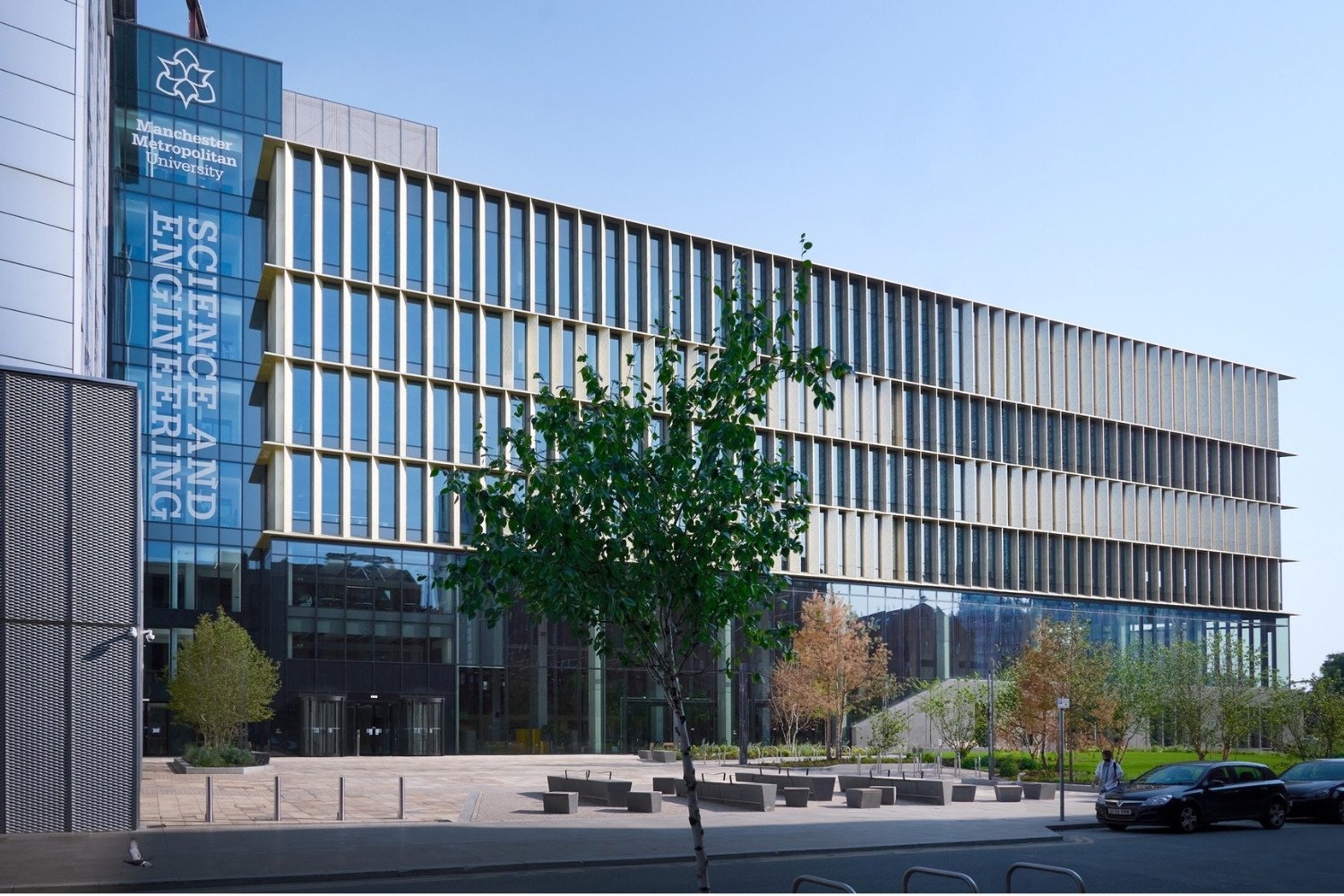
The Estates Masterplan at Manchester Metropolitan University
The Estates Masterplan

Client:
Manchester Metropolitan University


Project
An award-winning university. An ambitious Estates Masterplan. A long-term AV strategy. Discover how we are supporting Manchester Metropolitan University’s continued evolution alongside technologies from Crestron, TeamMate, Sharp and Panasonic…



The Client
Manchester Metropolitan University is one of the UK’s largest universities, with an ambitious approach to teaching, research and the student experience. Its continued success has seen it crowned Modern University of the Year 2027 by The Times and Sunday Times Good University Guide for the second consecutive year, alongside being recognised as University of the Year for Scholarships and Bursaries 2027. Behind that success sits an equally ambitious approach... Rather than viewing AV as a collection of individual room installations, Manchester Met has developed a long-term strategy that places technology at the heart of its evolving estate. Working closely with Roche AV Pro and a carefully selected ecosystem of technology partners, the University has created a repeatable model for delivering learning, teaching and collaborative environments that are intuitive, reliable, flexible and ready to evolve. The transformation is defined not simply by its scale, but by its ambition, rethinking and execution. It unifies an increasingly diverse university estate around a consistent technology experience, reducing the cognitive burden on academic staff while enabling new models of teaching, collaboration and smarter working.
At the centre of the strategy are six guiding principles: Simplicity. Reliability. Flexibility. Scalability. Strategic Alignment. Smart Procurement.
Together, they provide the framework through which technology decisions support both day-to-day requirements and Manchester Met’s longer-term Estates Masterplan.
An Estate-Wide Strategy
Like many large universities, MMU’s AV estate had evolved organically over many years. Different buildings and rooms featured different technologies, controls and user experiences. Academic staff moving between spaces could encounter entirely different ways of operating the AV, increasing complexity and placing additional demands on support teams. Significant work had already taken place to address this, but investment inevitably happened incrementally as budgets, buildings and technology standards evolved.
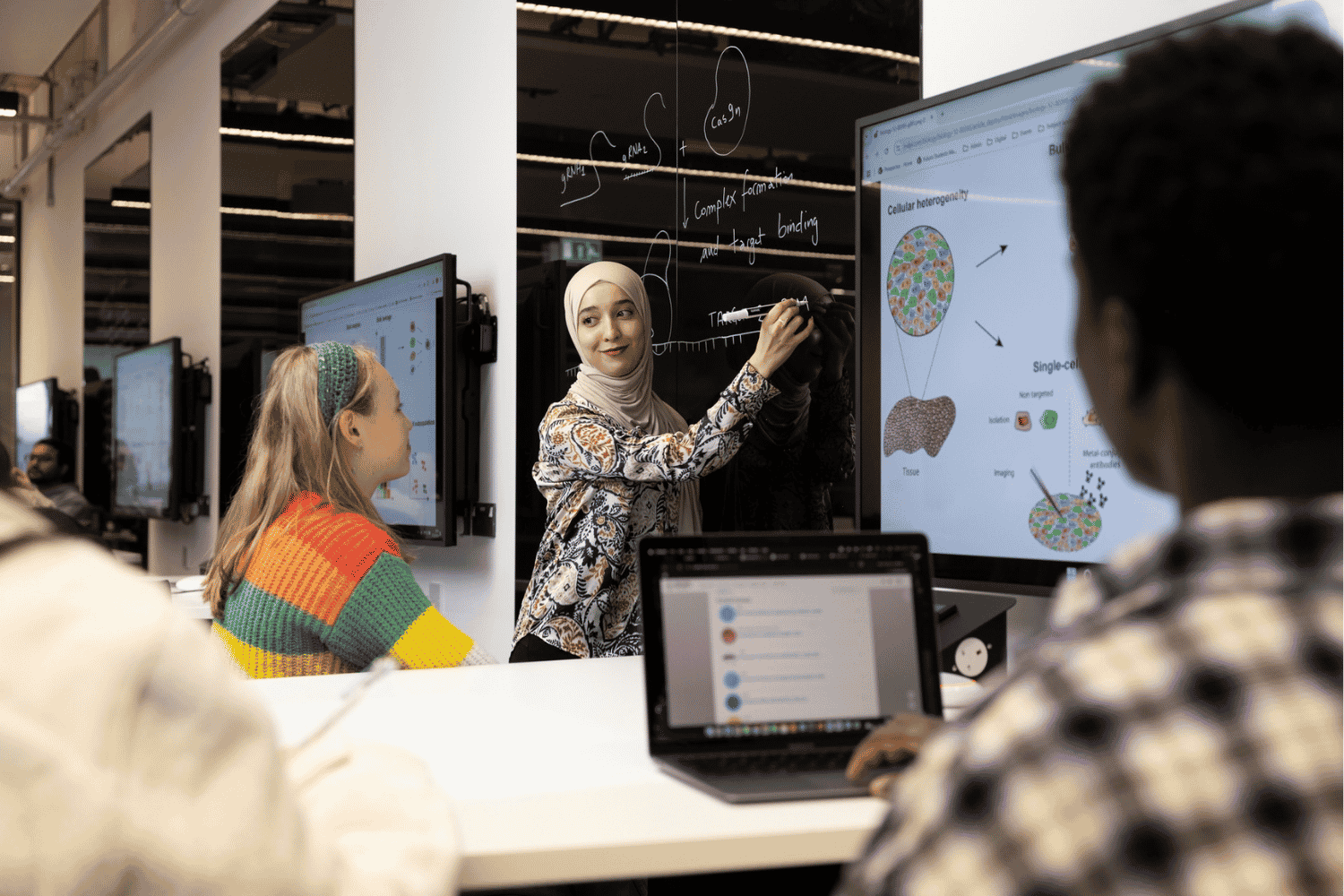
At the same time, expectations were changing. Hybrid learning accelerated rapidly and subsequently evolved into a requirement for flexible, permanent teaching environments capable of bringing together students participating both physically and remotely. Manchester Met responded by thinking at an estate rather than room level. Standardisation created a consistent core experience. Universal USB-C connectivity simplified how users connect. Enterprise management allowed technology to be managed at scale. HyFlex developed into a long-term teaching model. Stronger relationships with strategic partners improved access to technology, expertise and commercial support. Crucially, this was not standardisation for its own sake. It provided a common technological foundation upon which specialist environments could still be created.
Transformation across the estate
The scale of the strategy can be seen across a wide range of spaces including:
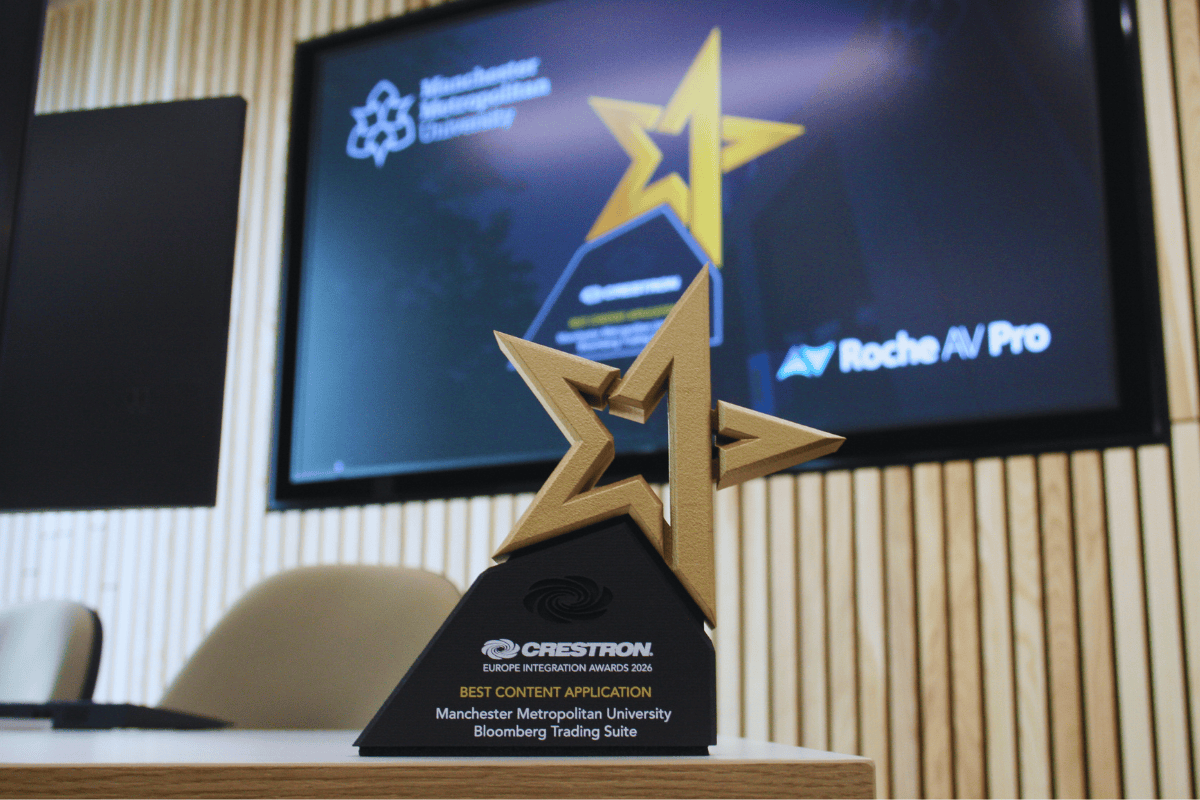
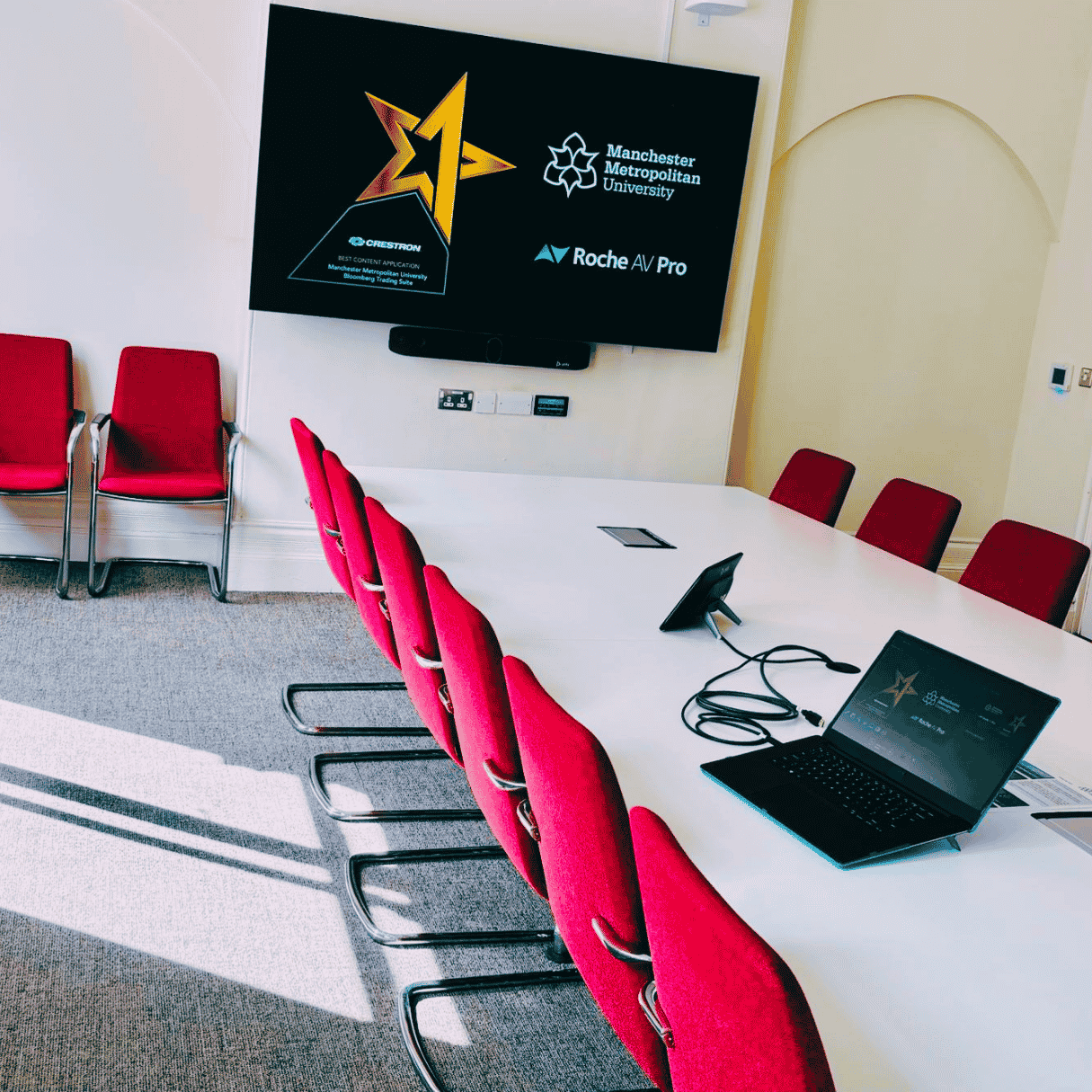
Bloomberg Trading Suite, winner of Best Content Application at the Crestron Innovation Awards 2026
Manchester Met Business School renewal, encompassing 63 spaces including its lecture theatres
Geoffrey Manton Building renewal, covering 37 spaces including its lecture theatres
International College, incorporating nine seminar rooms, two computer labs and two meeting spaces
MBA Hybrid Teaching Space, runner-up at the AMBA Digital Transformation Awards 2026
Careers Hub
HyFlex Teaching, including eight large and medium theatres across Manchester Met
Hybrid and Smarter Working, including 17 new and renewed installations
School of Digital Arts UX Suite
Each environment has different requirements, but all contribute to the same strategic objective: creating technology-enabled spaces that are simple for staff and students to use, efficient to support and adaptable to future change.

Spotlight: The Dalton Building
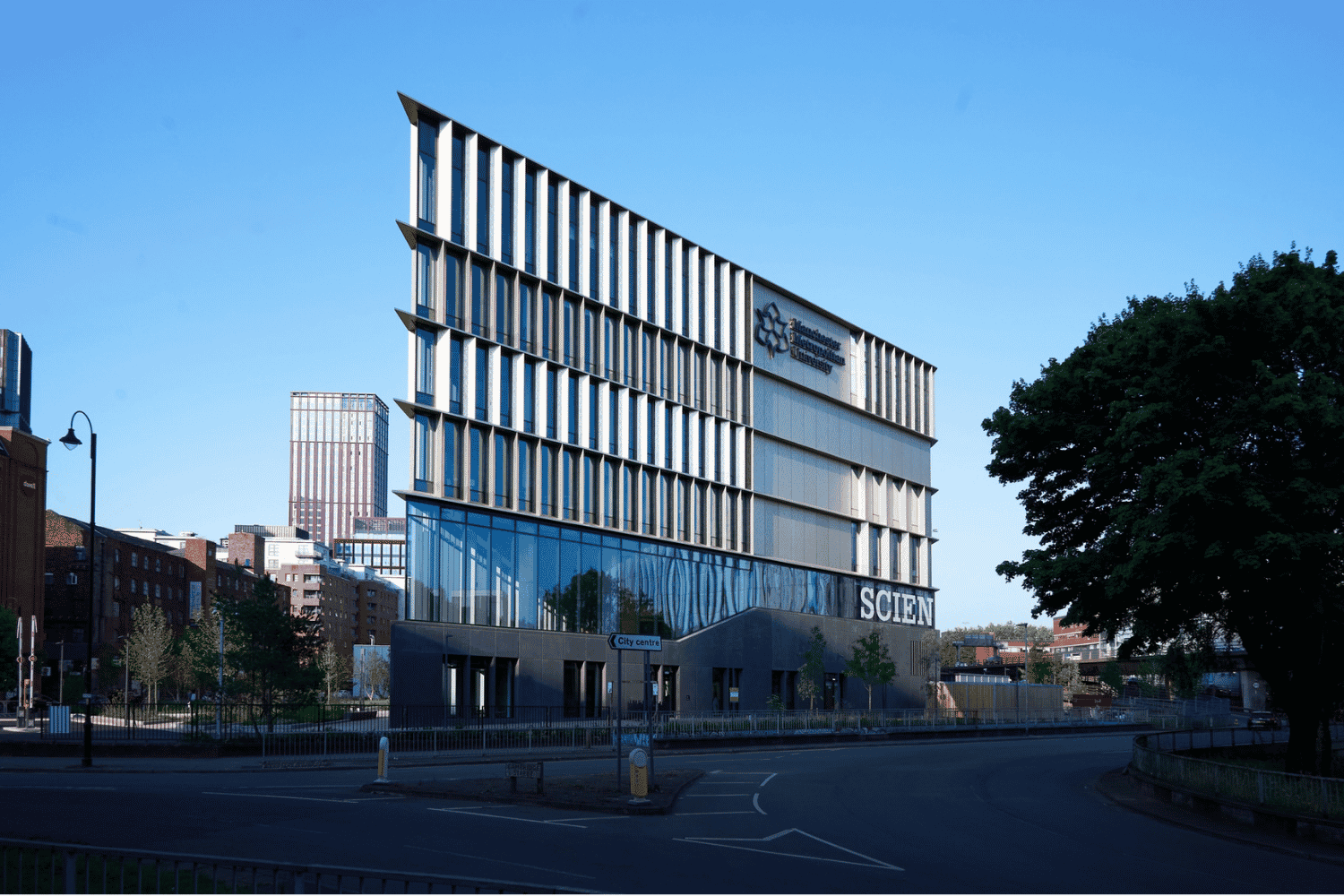
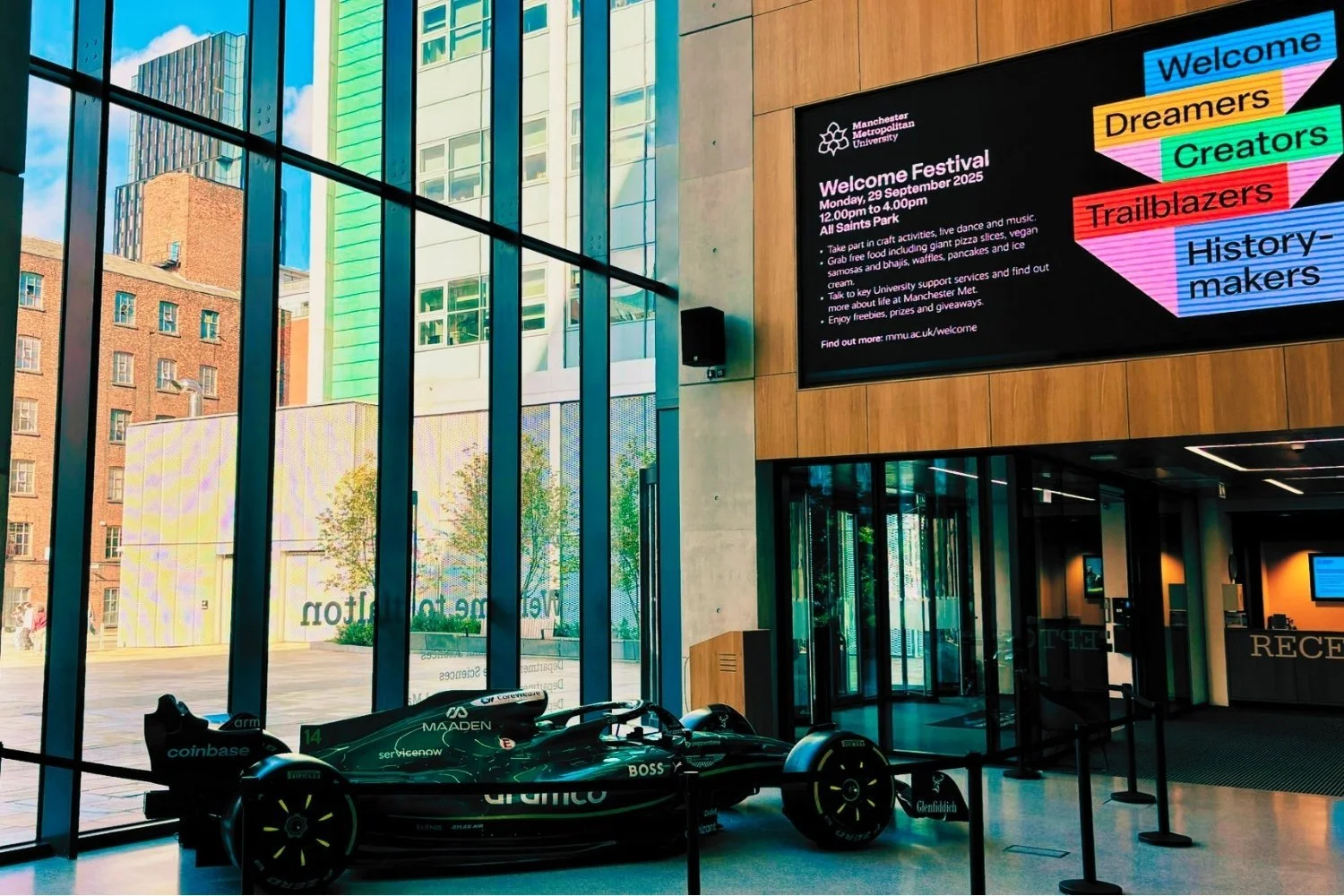
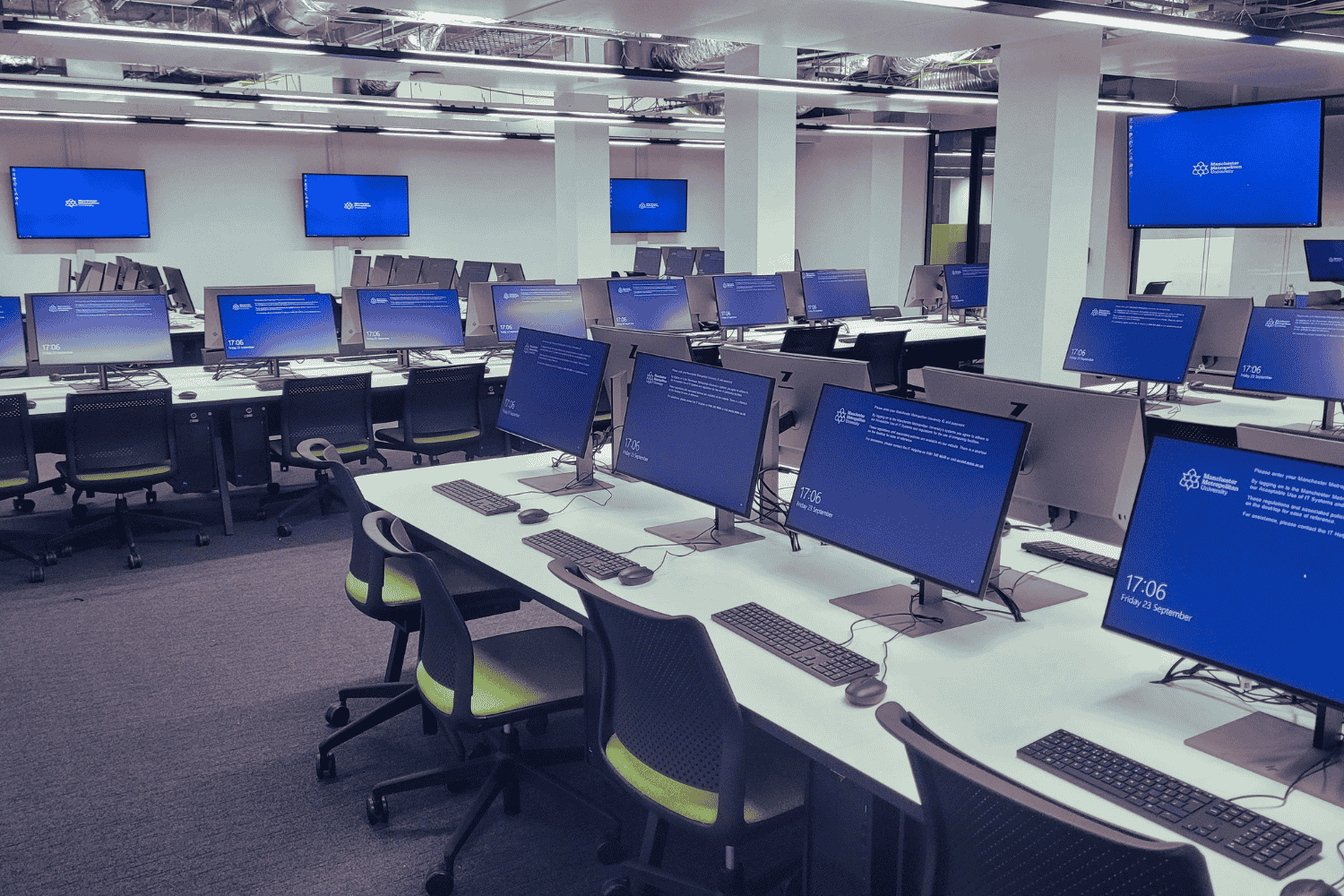
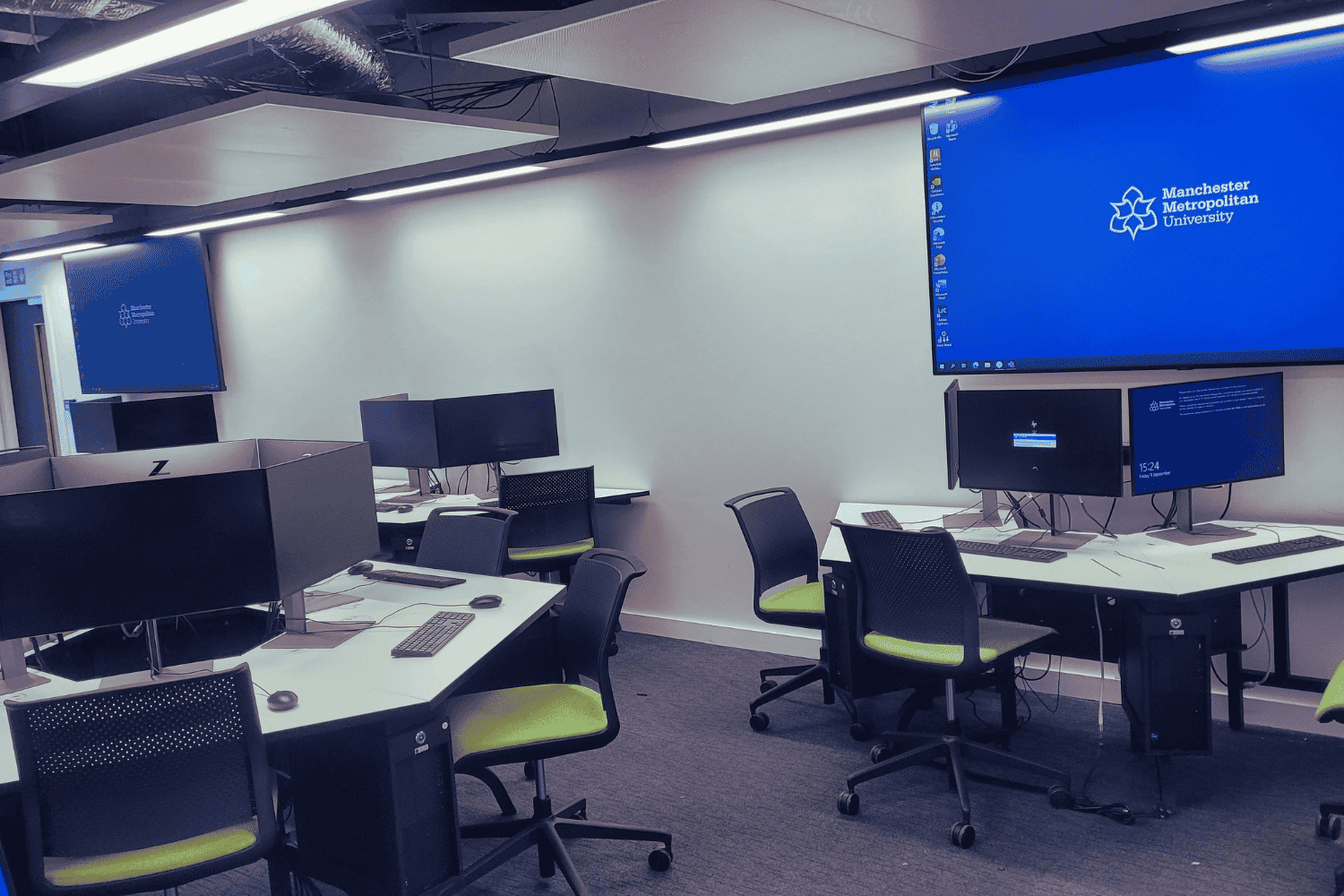
Opened in 2024, the £45 million Dalton Building brings together teaching, research and collaboration within a modern, flexible environment for the University’s Faculty of Science & Engineering. In 2026 it was recognised as Building of the Year at the RIBA North West Awards, reflecting its innovative approach to higher education design. The Dalton Building is the flagship implementation of Manchester Metropolitan University’s AV strategy. More than 100 Sharp MultiSync large format and interactive displays have been deployed throughout lecture theatres, seminar rooms, collaborative learning spaces and specialist laboratories, complemented by a striking 4.8m wide LED wall in the main reception. Together they deliver the consistent visual experience that underpins the University’s campus-wide approach while providing a reliable platform that’s straightforward to manage and support.
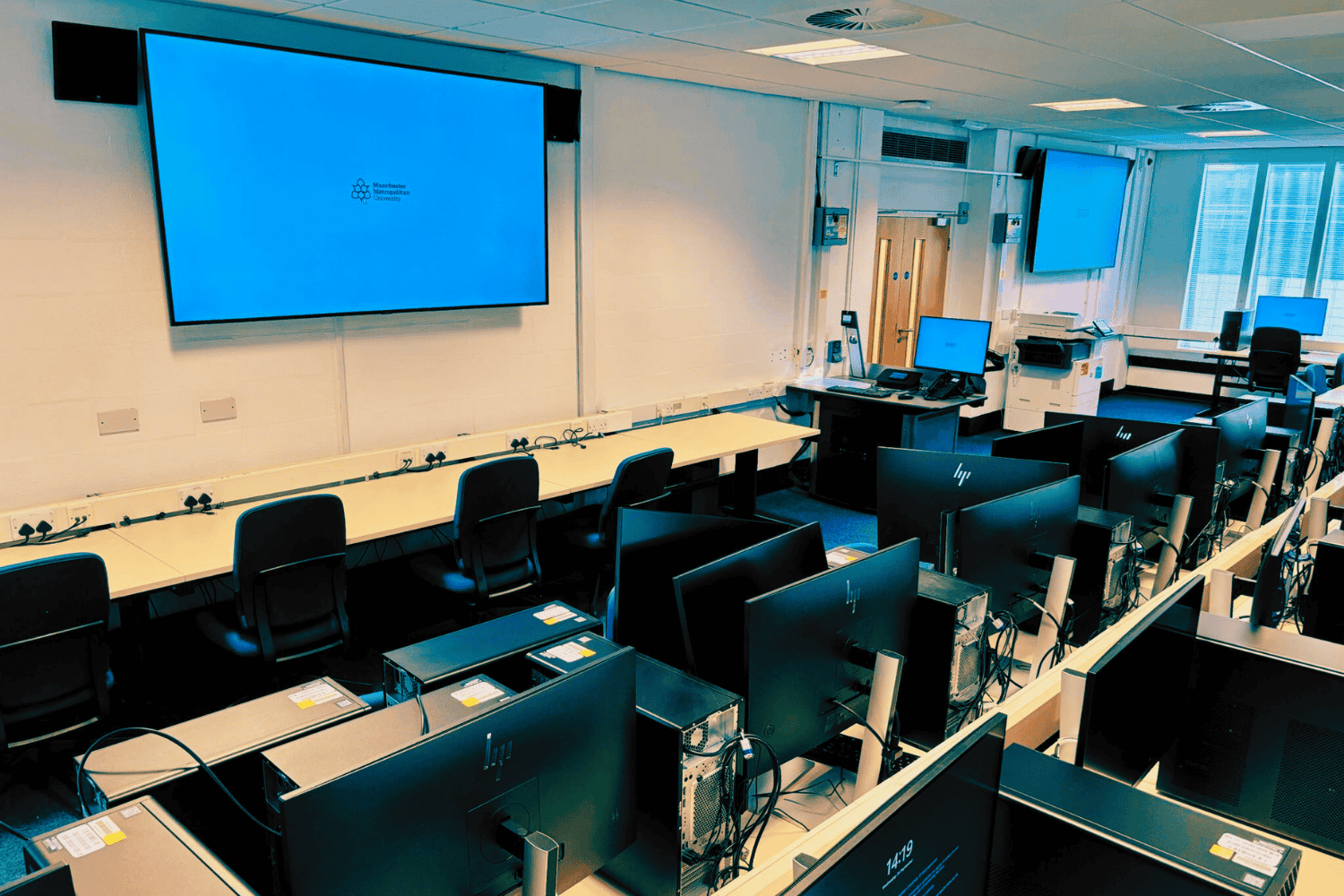
The same principles extend across the wider campus, from the Science & Engineering Superlab and the award-winning Bloomberg Trading Suite to everyday teaching rooms. Sharp display technology provides a familiar user experience while allowing each environment to meet its own specialist teaching requirements. Standardising on a common technology platform has created an AV ecosystem that is intuitive for users, efficient to support and flexible enough to accommodate changing developments. This combination of scale and flexibility demonstrates an important principle behind Manchester Met’s strategy: specialist spaces can deliver sophisticated functionality without sacrificing the familiar user experience that underpins the wider estate.
Getting the Technology Out of the Way
The success of Manchester Met’s approach is perhaps best summed up through one deceptively simple objective: getting the technology out of the way. HyFlex teaching illustrates this particularly well.
What began as a limited pilot evolved into a scalable model for bringing together physical and remote participants. Behind the scenes, the environments integrate with institutional systems including timetabling, attendance monitoring, Microsoft Teams and the University’s wider digital learning infrastructure.
For the academic, however, that complexity is deliberately hidden behind an interface closely aligned to Manchester Met’s familiar teaching environments.
As Rod Cullen, Principal Reader within the Digital Education Team, explains:
“We now have HyFlex teaching and learning spaces where, as you eloquently describe it, the ‘technology has been got out of the way’ for teachers and students alike.”
That simplicity has implications beyond convenience. It allows academics to concentrate on teaching rather than technology and helps students participating remotely feel part of the same learning environment.

Bloomberg Trading Suite
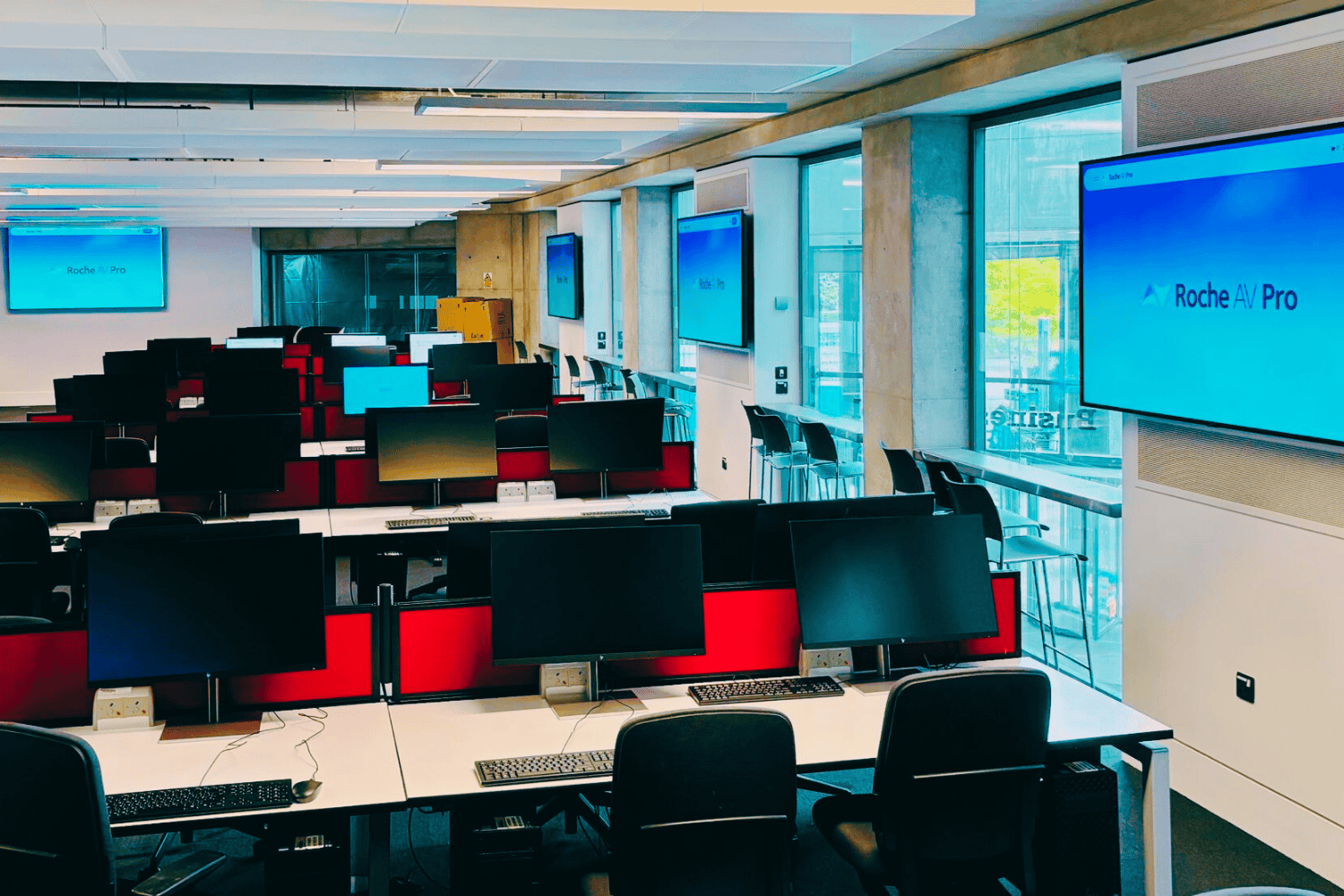
The Bloomberg Trading Suite provides another compelling example of what Manchester Met’s standardised technology foundation can enable. Rather than recreating a traditional trading floor, Manchester Met developed a flexible AV-over-IP environment in which student workstations are tightly integrated with the room technology. Student displays can become presentation devices, enabling complex demonstrations to take place alongside students’ own work. The use of dual 4K displays allows students to follow detailed lecturer demonstrations on one screen while working independently on the other. Despite the sophistication behind the technology, the control interface retains the same familiar philosophy used elsewhere across the University. The approach received international recognition, winning Best Content Application at the Crestron Innovation Awards 2026, while Manchester Met reports that other universities and trading organisations have sought to understand and replicate the model.
Best in class partners
Manchester Met’s transformation is underpinned by long-term relationships with specialist technology manufacturers. Rather than selecting technology independently for every space, solutions are evaluated against the University’s wider strategic principles, balancing performance and functionality with reliability, supportability, longevity and user familiarity. In Crestron, Sharp, Panasonic and Teammate they have a network of partners to cover all their Display, Projection, AV Furniture and Control needs.




Spotlight: Sharp
Visual technology represents another crucial element of Manchester Met’s standardisation strategy.
Since 2020, Sharp (formerly Sharp/NEC) technology has formed the University’s standard display platform, with MultiSync professional displays becoming a familiar presence across teaching environments.
Within the Dalton Building alone, more than 100 large-format and interactive displays have been deployed throughout lecture theatres, seminar rooms, collaborative spaces and specialist laboratories, complemented by a striking 4.8m-wide Sharp LED wall within the main reception.
The value of that approach is consistency. A laboratory and a trading suite may have dramatically different applications, but common technology platforms provide familiarity for users and support teams.


Spotlight: Crestron
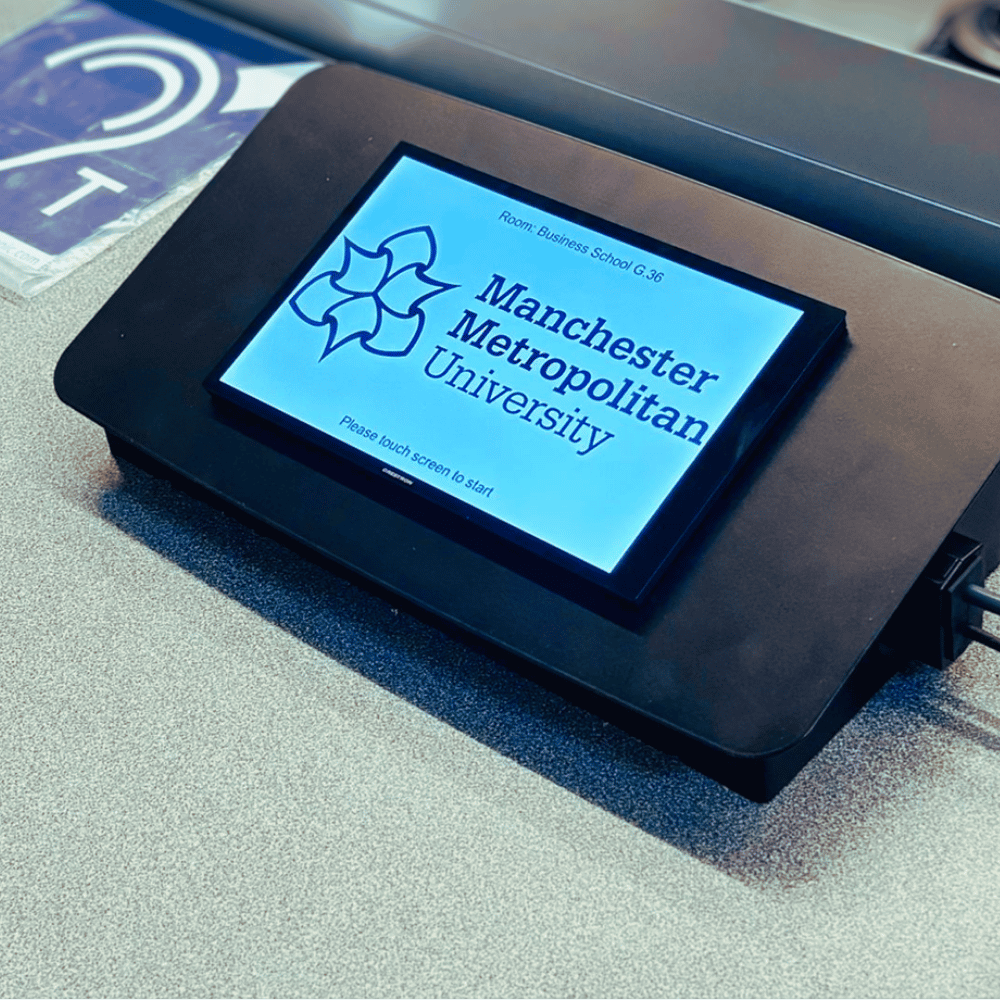
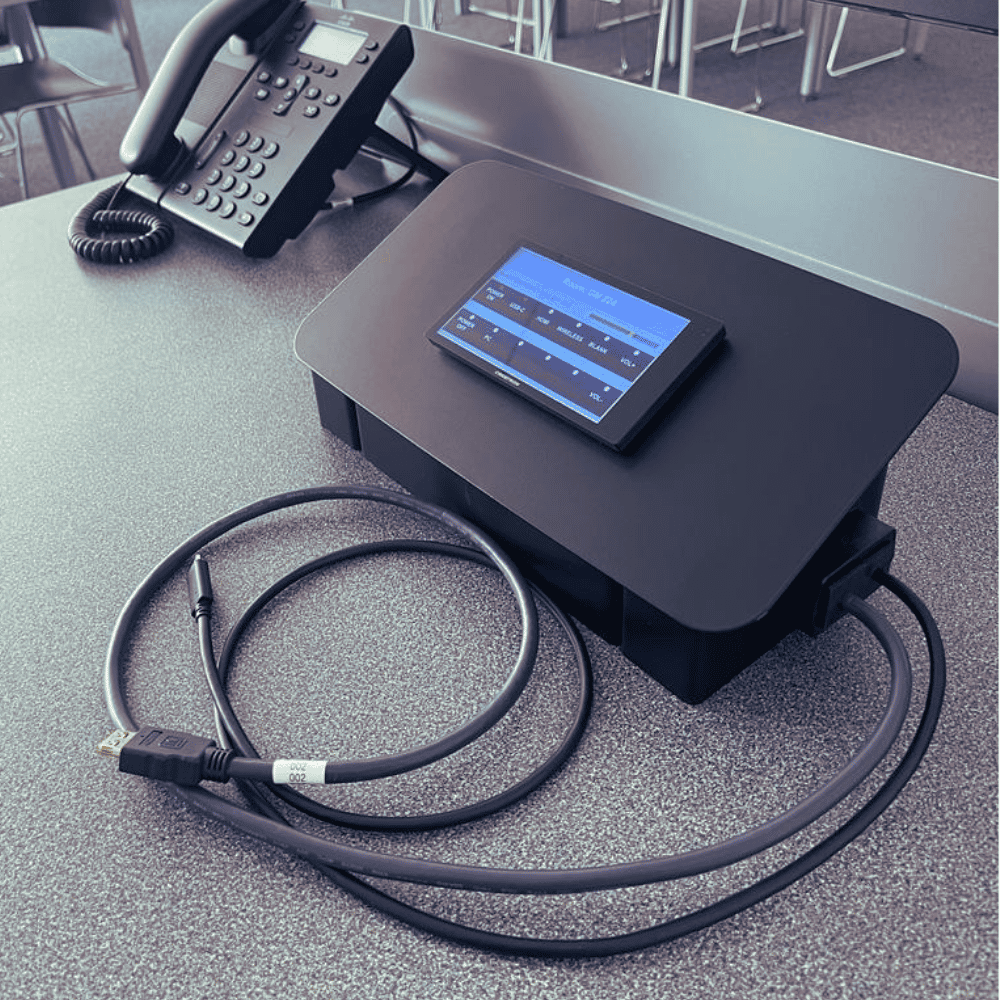
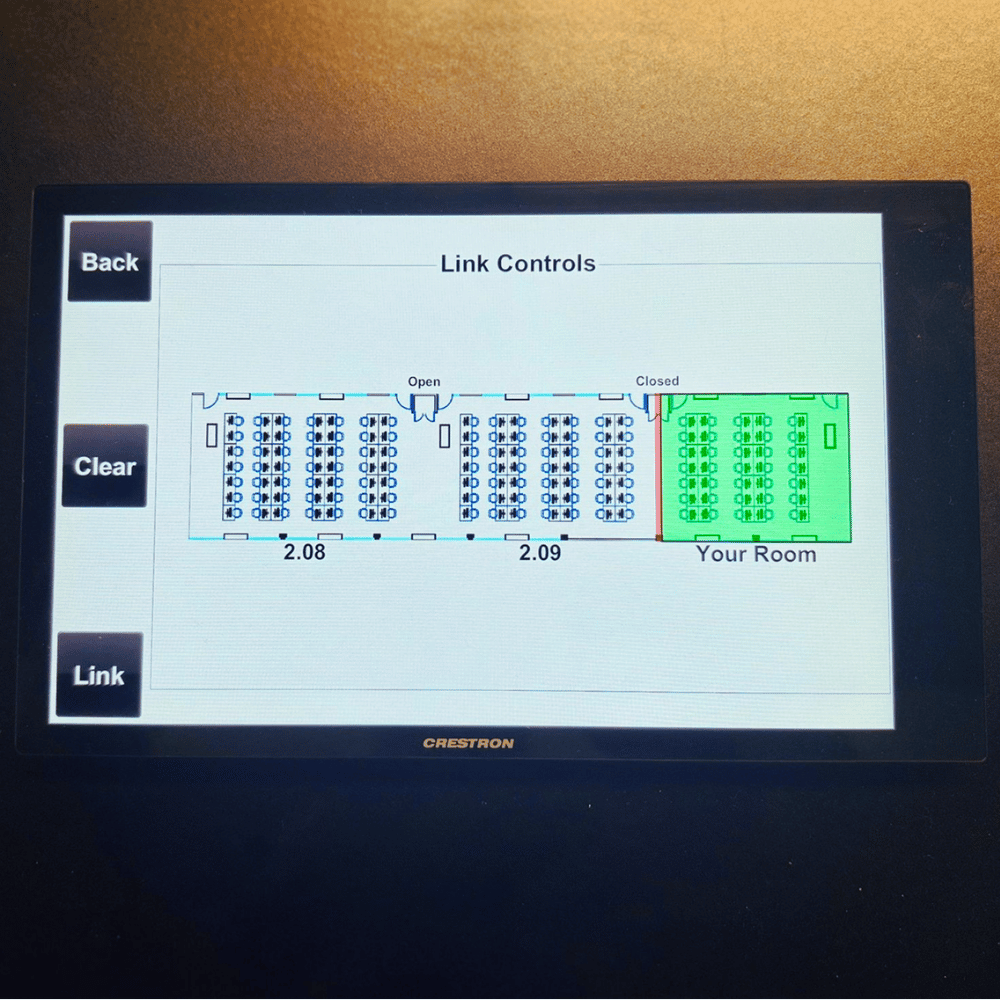
Crestron technology has a longstanding role within Manchester Met’s AV estate, providing the control platform behind the University’s familiar room experience. Following an in-depth technical evaluation, DM NVX was selected as the University’s preferred AV-over-IP distribution platform. It has subsequently become integral to advanced environments such as the Superlab, Bloomberg Trading Suite and School of Digital Arts UX Suite.
Its importance goes beyond video distribution. Crestron control and a familiar user interface enable highly sophisticated environments to retain the simplicity that Manchester Met regards as fundamental to successful technology adoption.
Spotlight: TeamMate
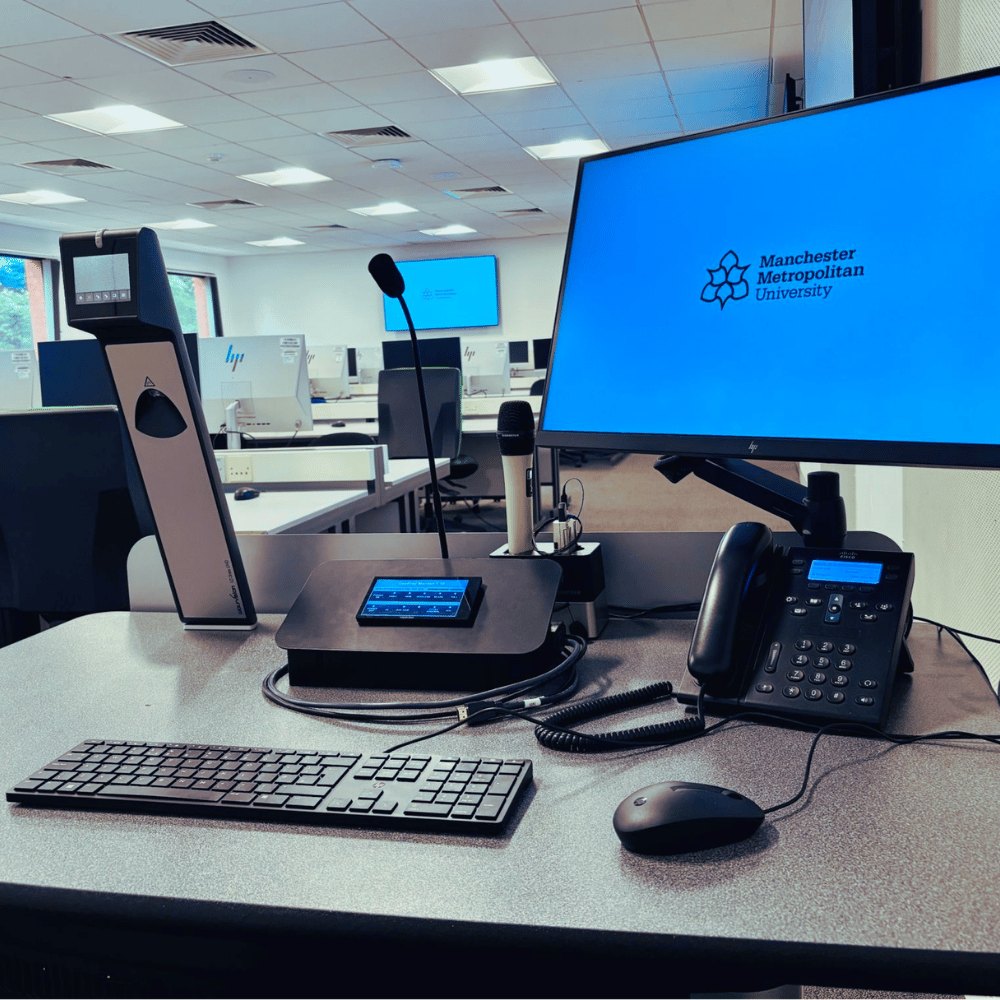
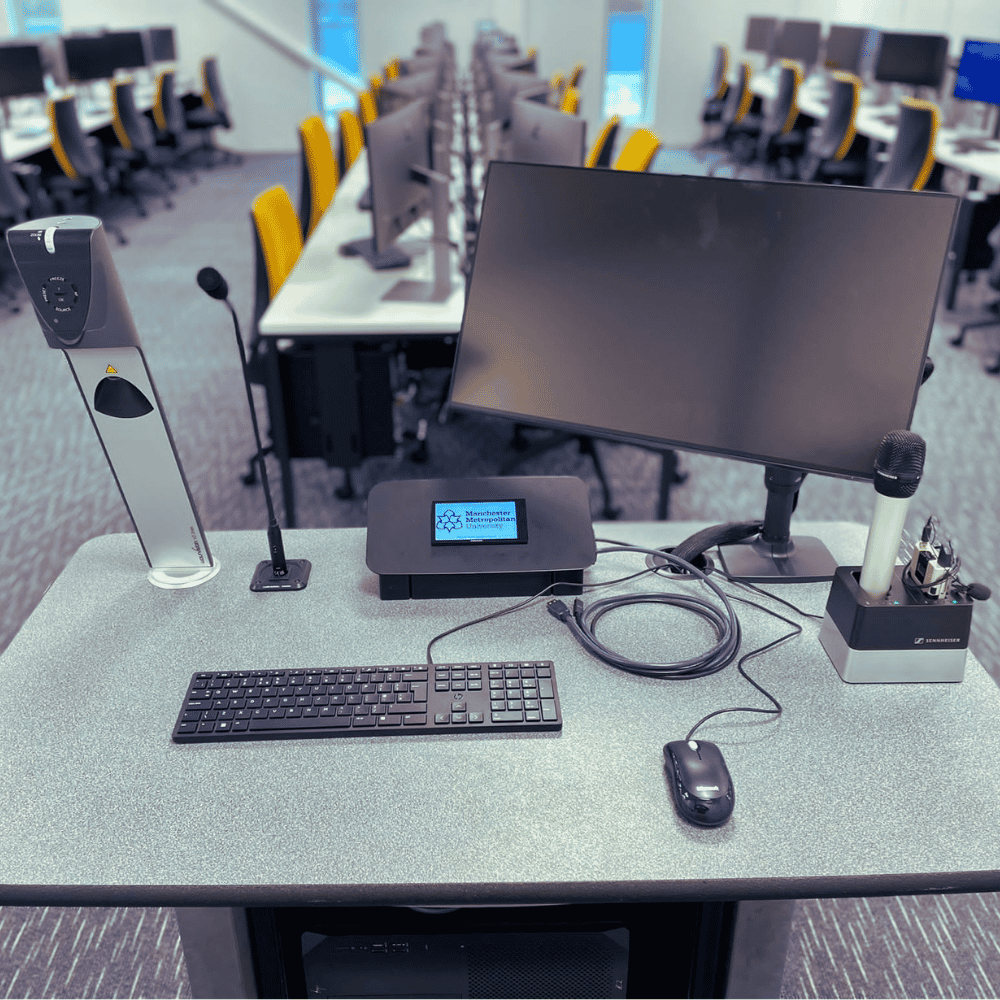
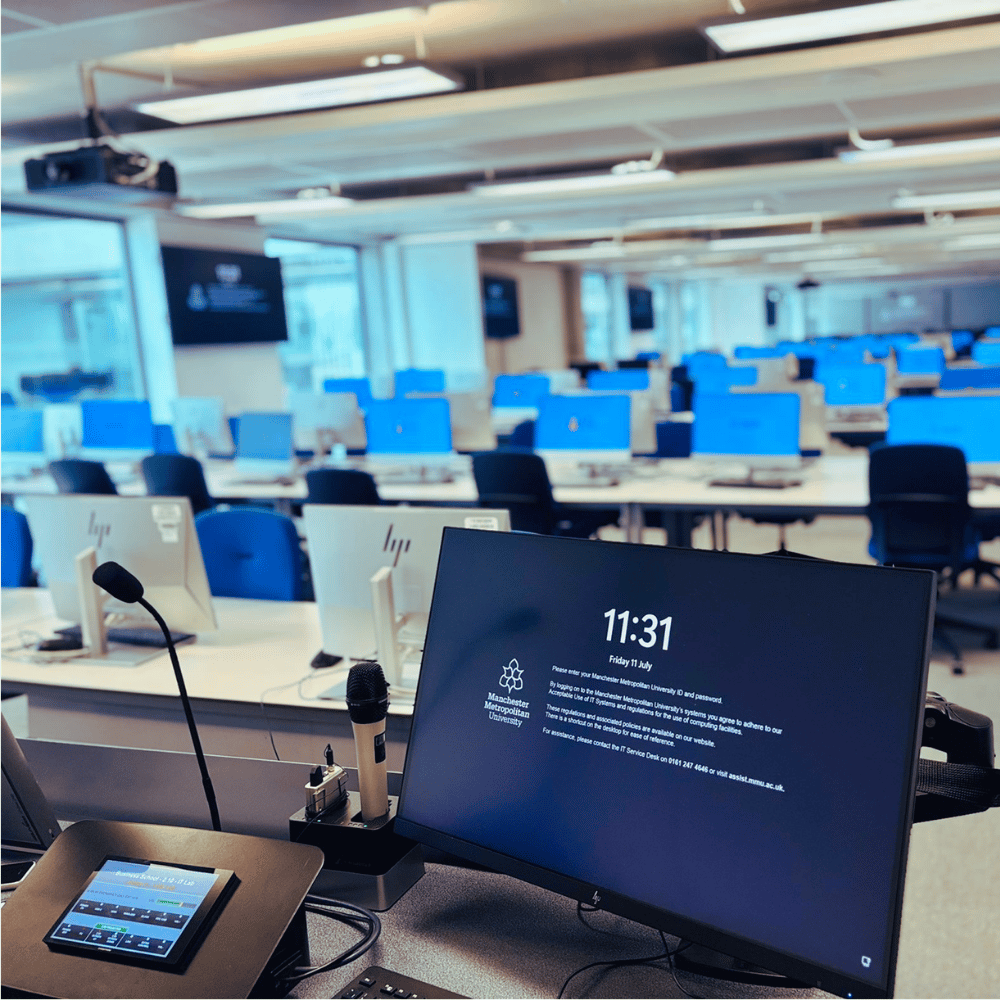
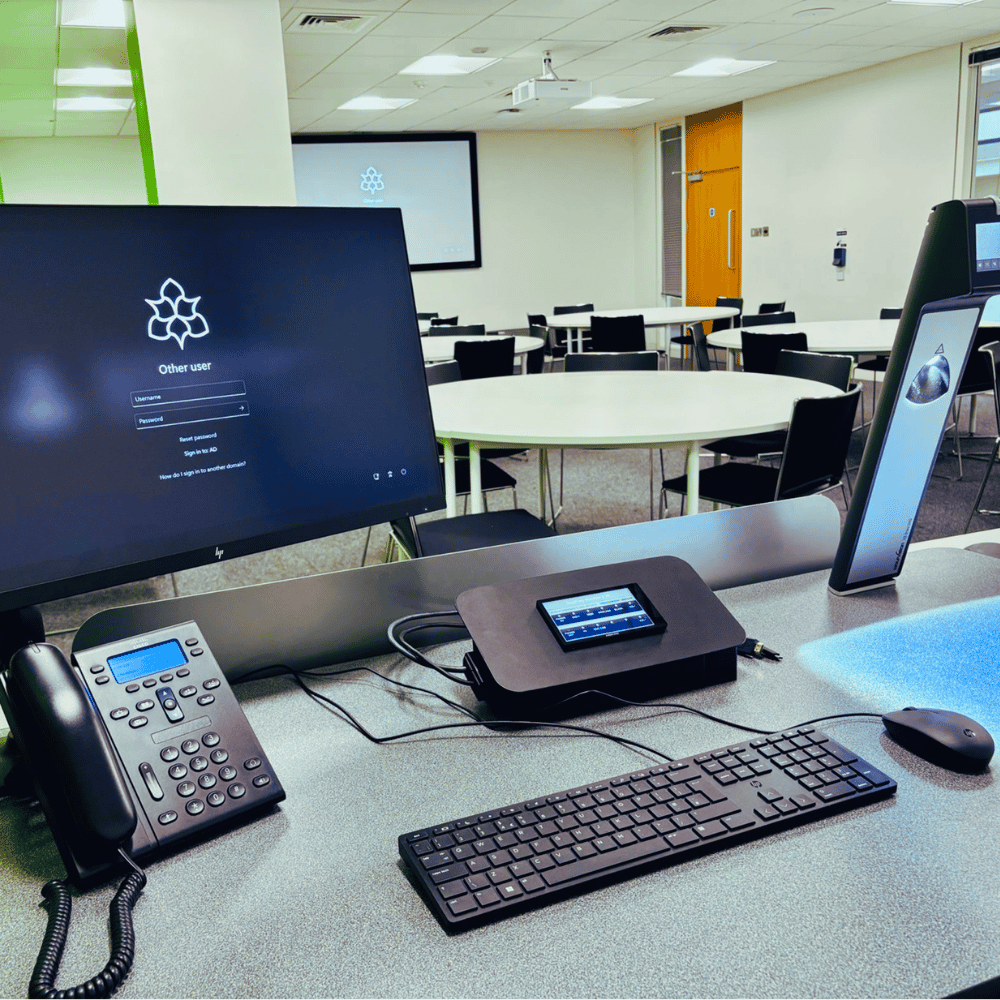
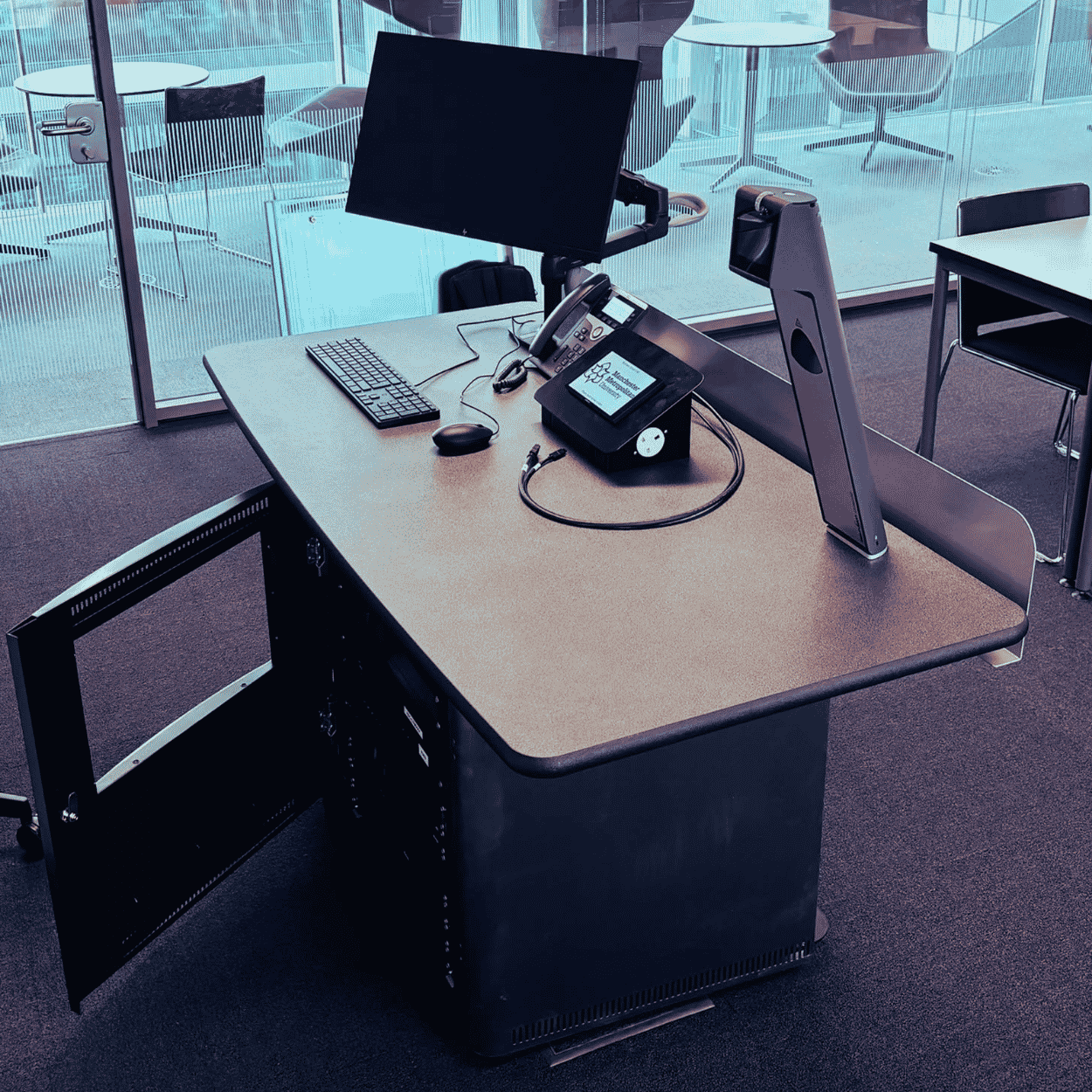
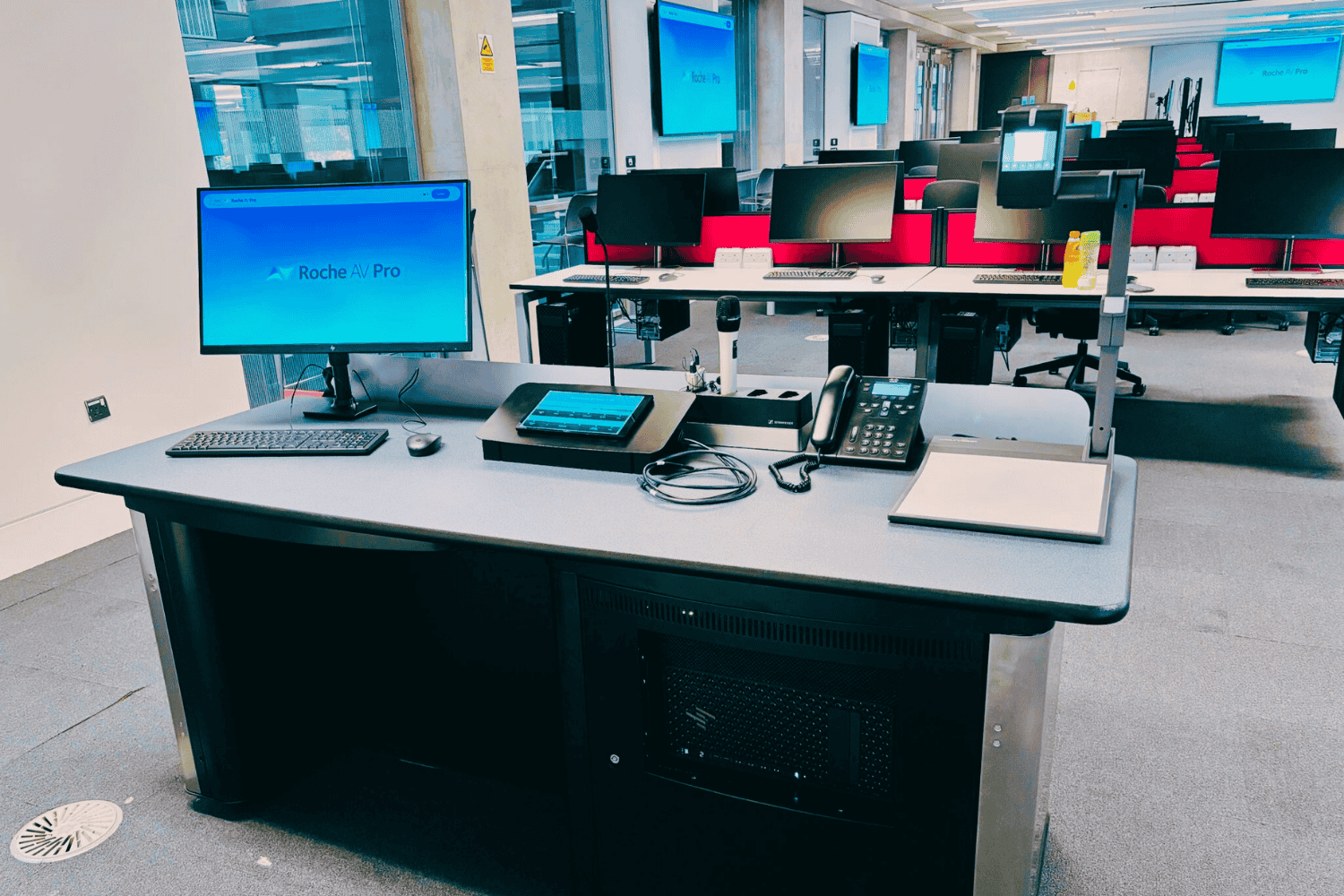
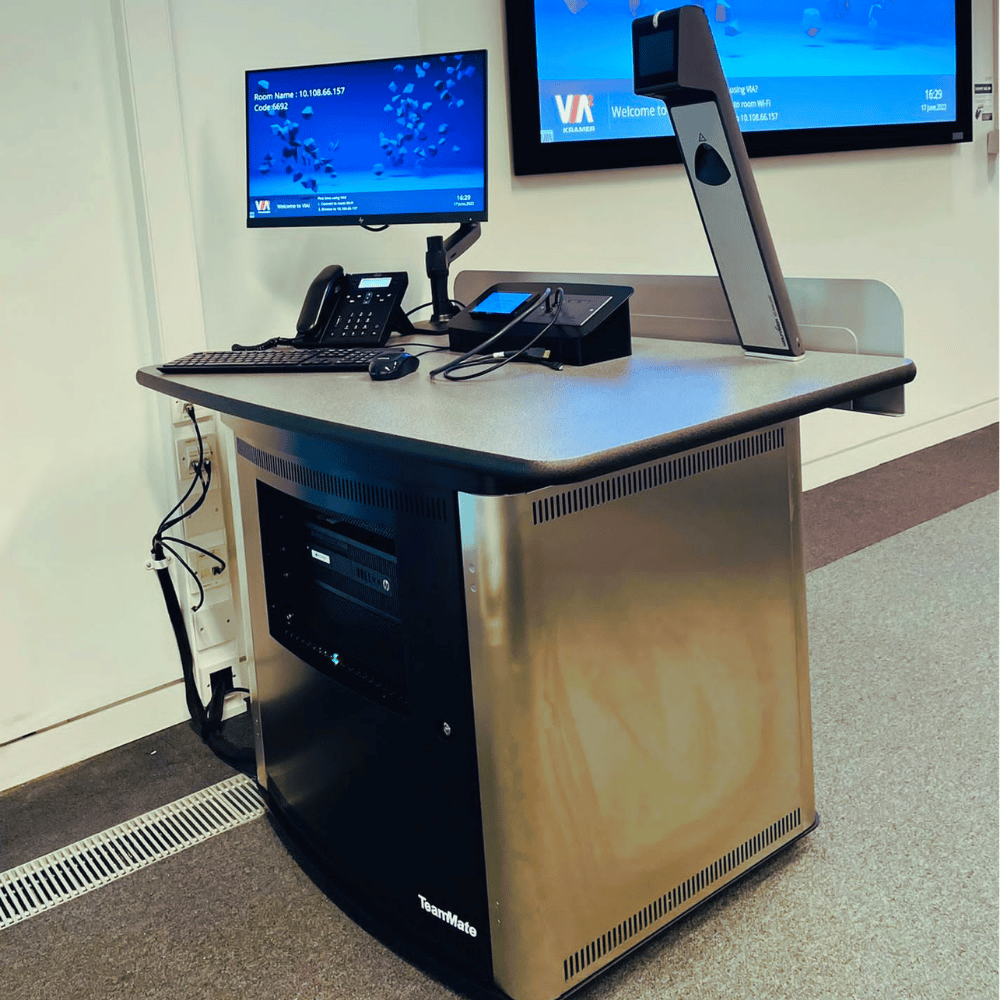
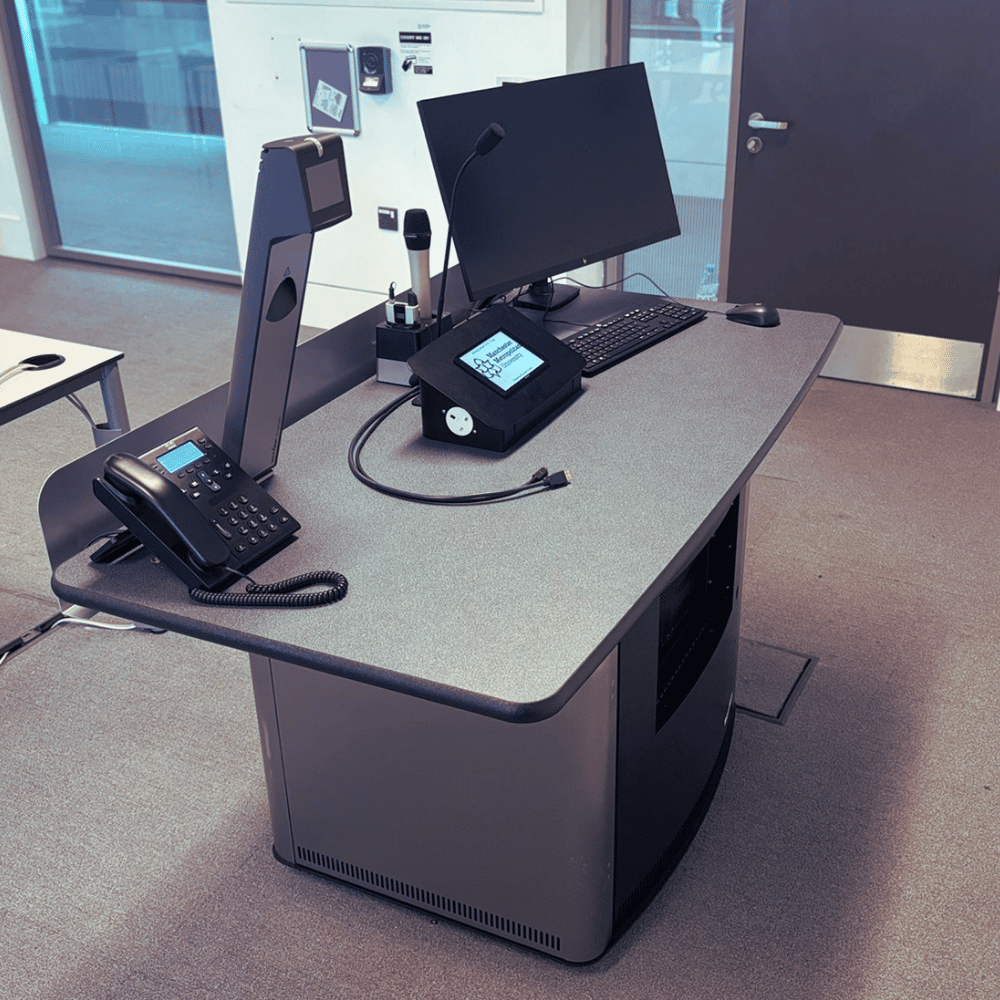
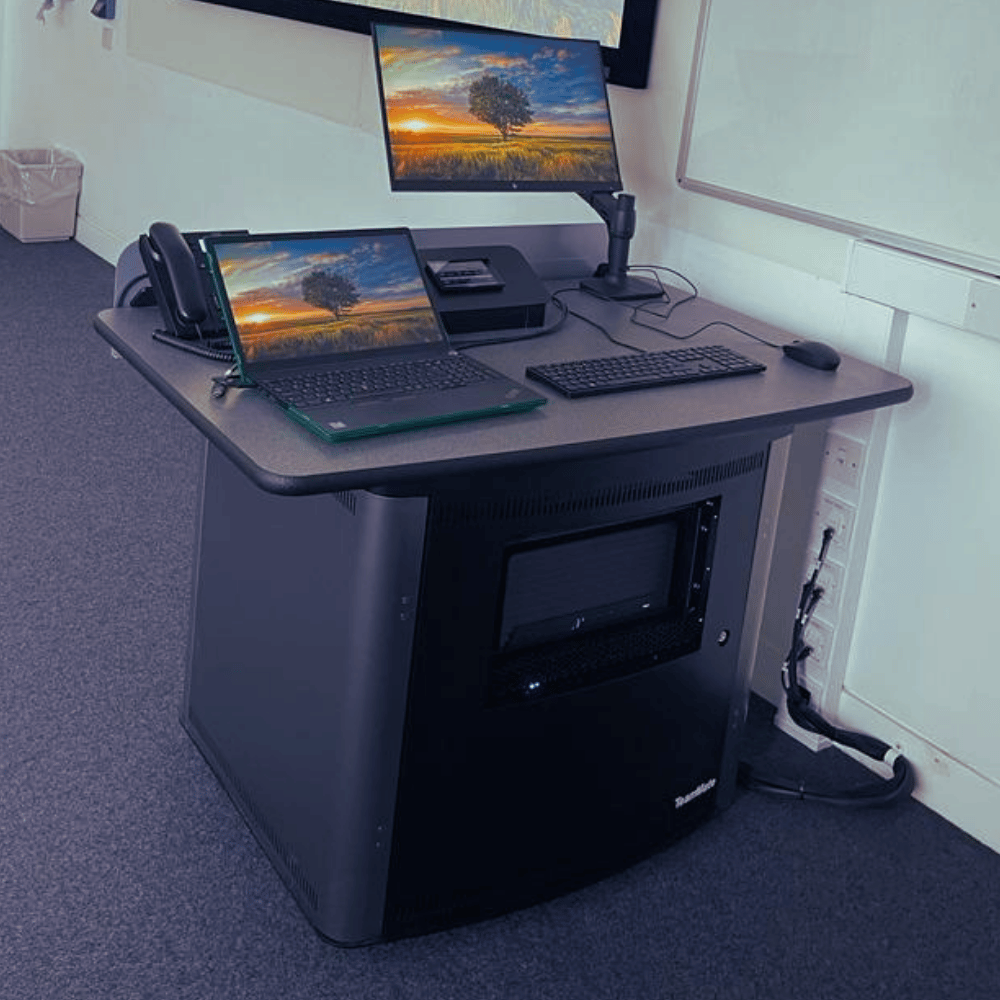
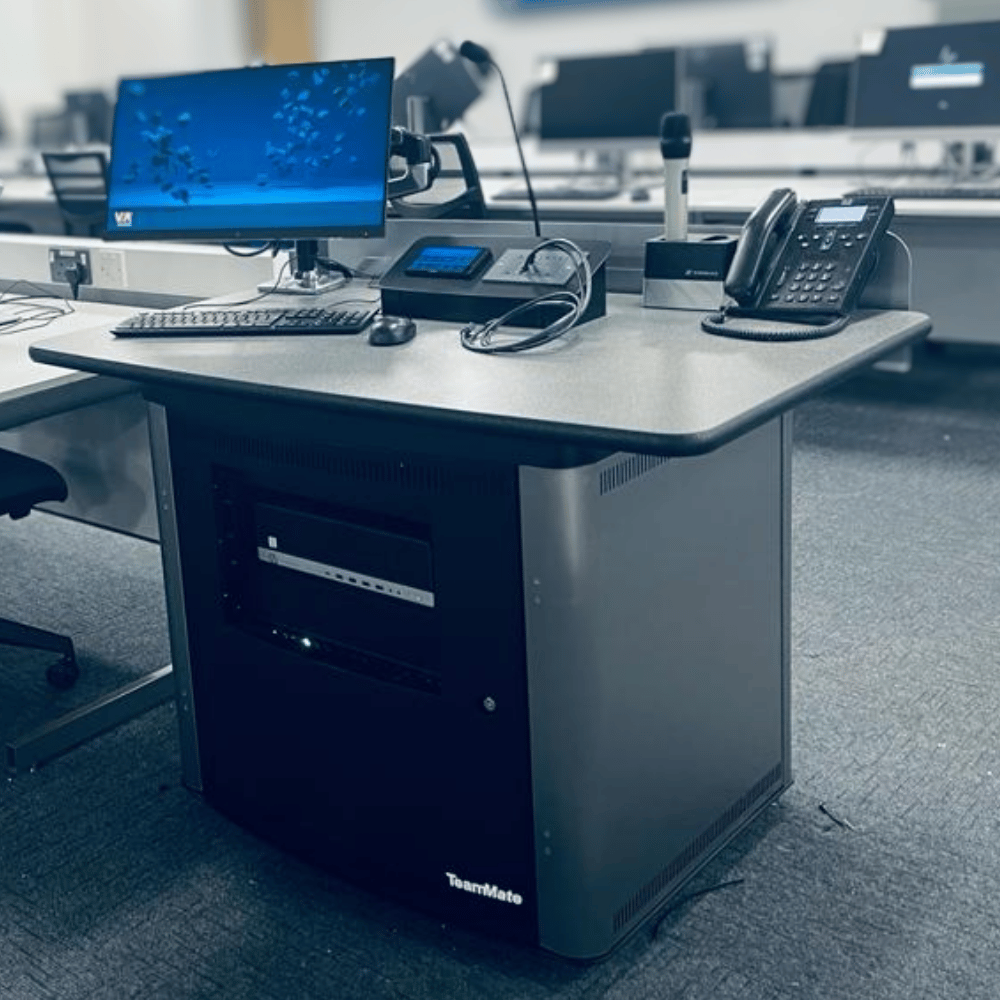
Manchester Met’s commitment to standardisation extends beyond the AV technology and into the physical teaching environment. TeamMate Educator lecturer workstations are deployed across numerous learning spaces, with both single and dual-rack configurations helping create a familiar, purpose-designed teaching position. Internal MMU records, for example, show Educator 3 desks across multiple teaching environments and continued investment in TeamMate furniture.
Alongside Educator, specialist TeamMate solutions, including ALT workstations in selected spaces, allow furniture to respond to individual teaching requirements while retaining the wider principles of consistency and usability. By integrating AV controls, presentation technologies, connectivity and equipment within the lecturer workspace, TeamMate provides an important physical interface between academic staff and the sophisticated room technology surrounding them.



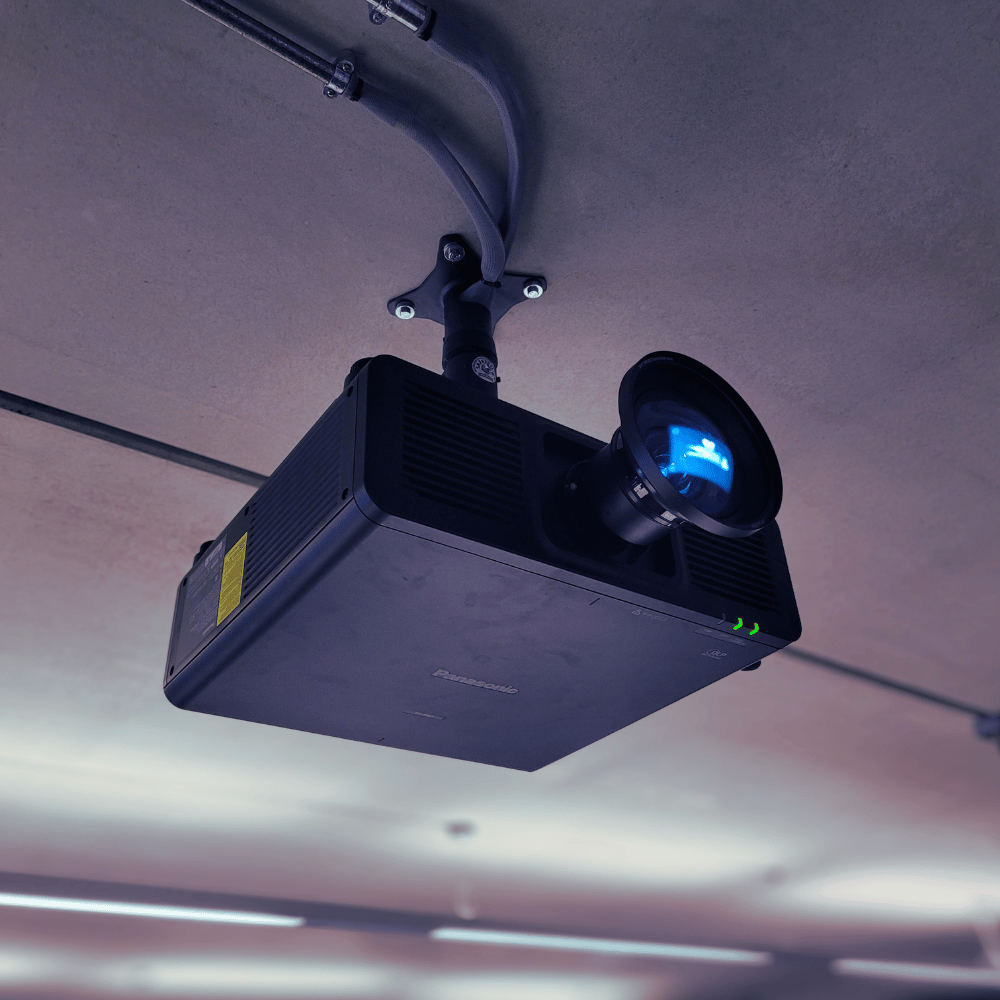
Spotlight: Panasonic
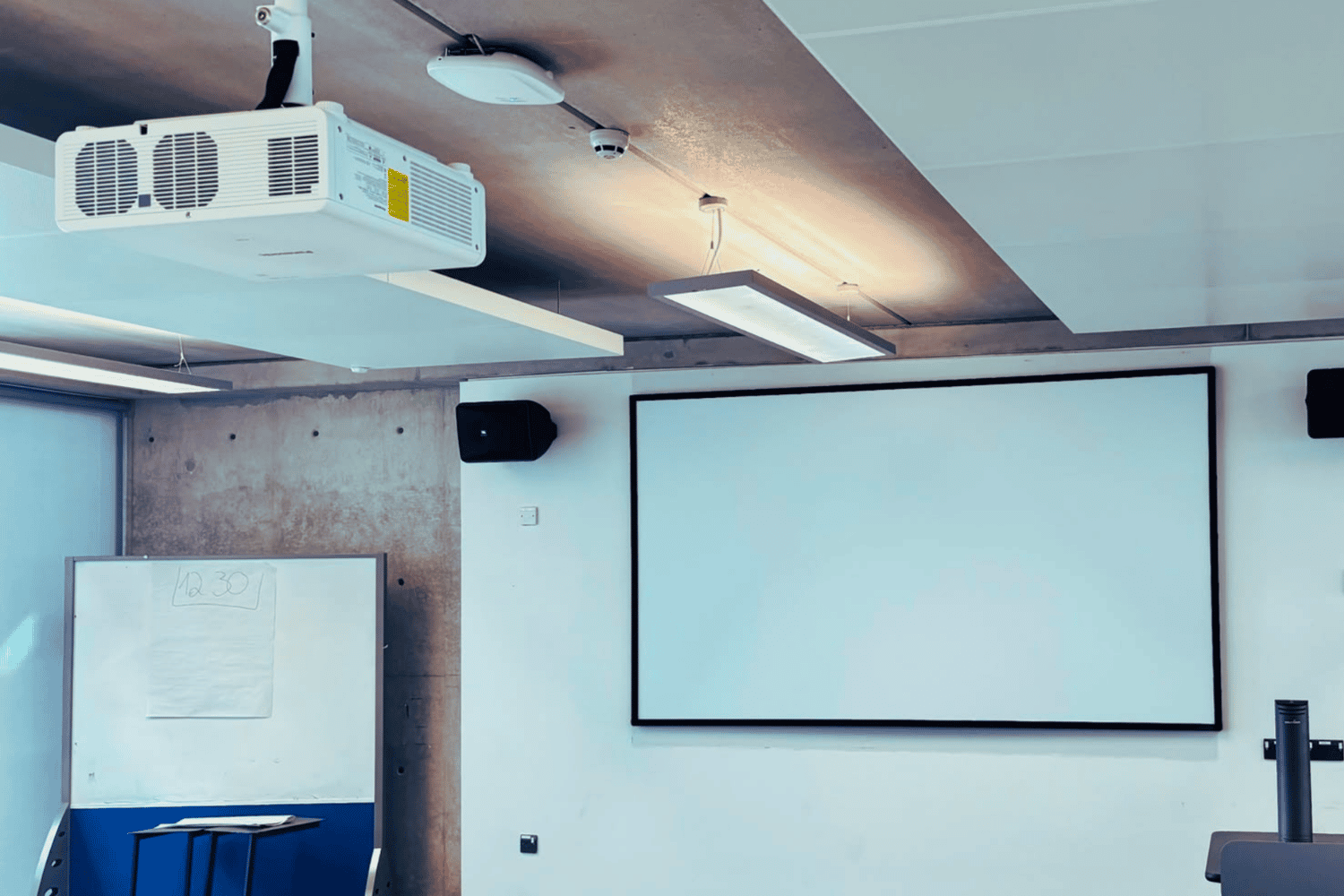
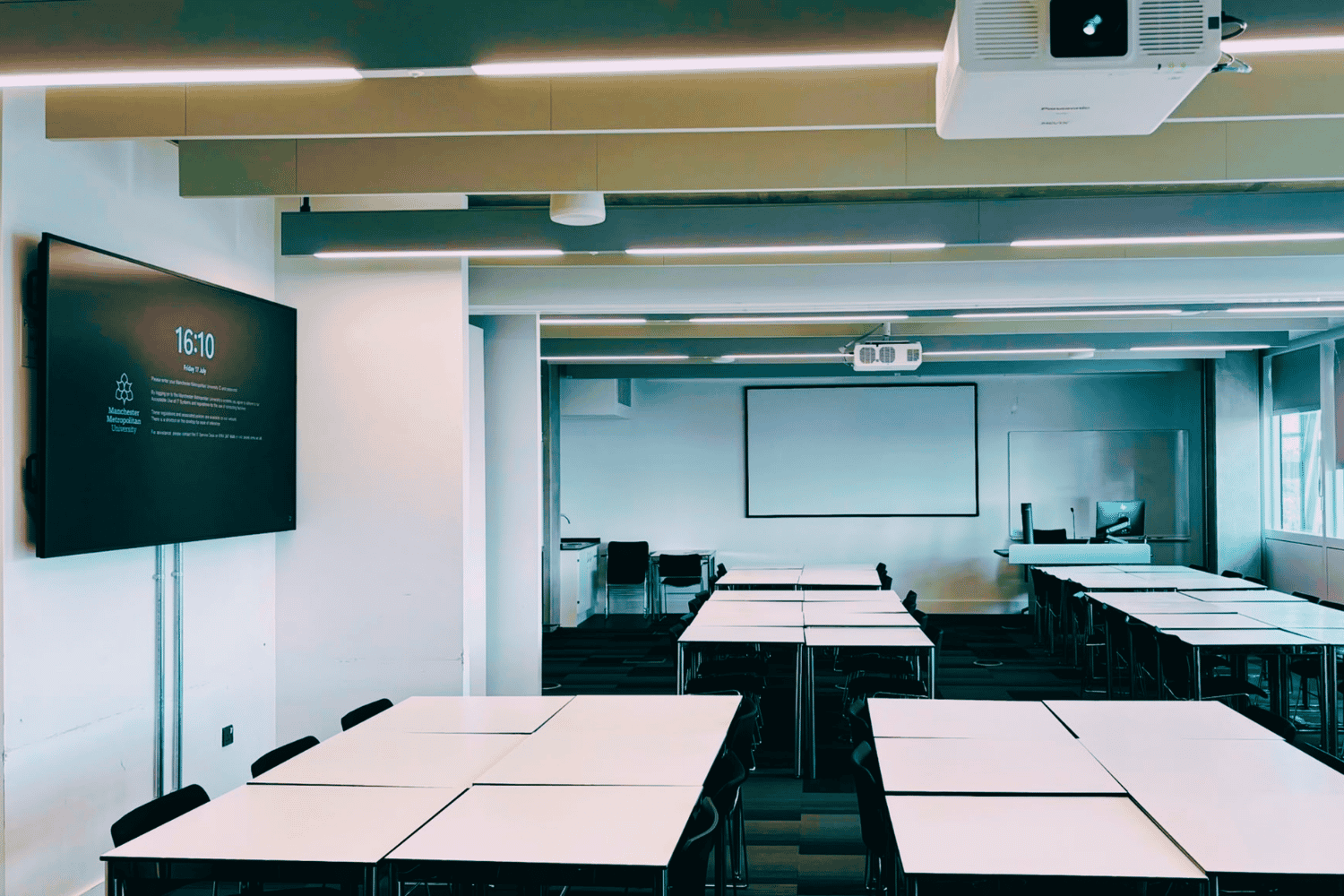
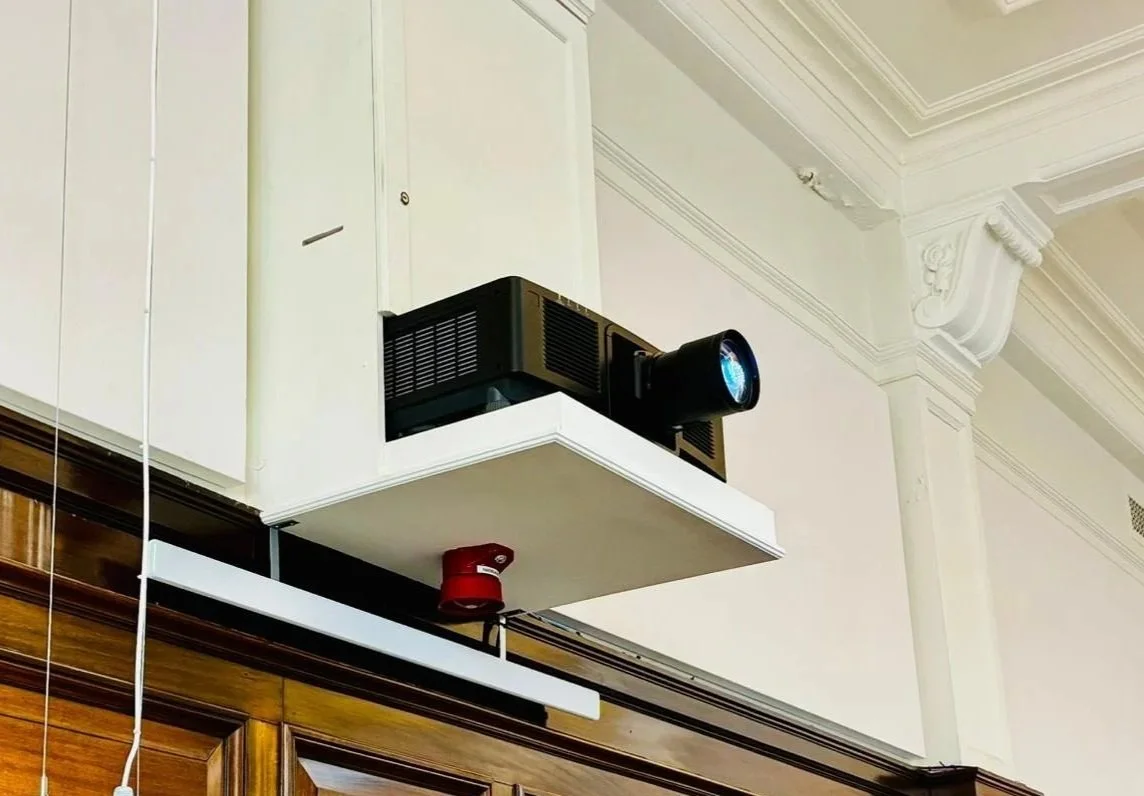
For teaching environments where projection remains the optimum visual solution, Manchester Met has developed a similarly strategic relationship with Panasonic.
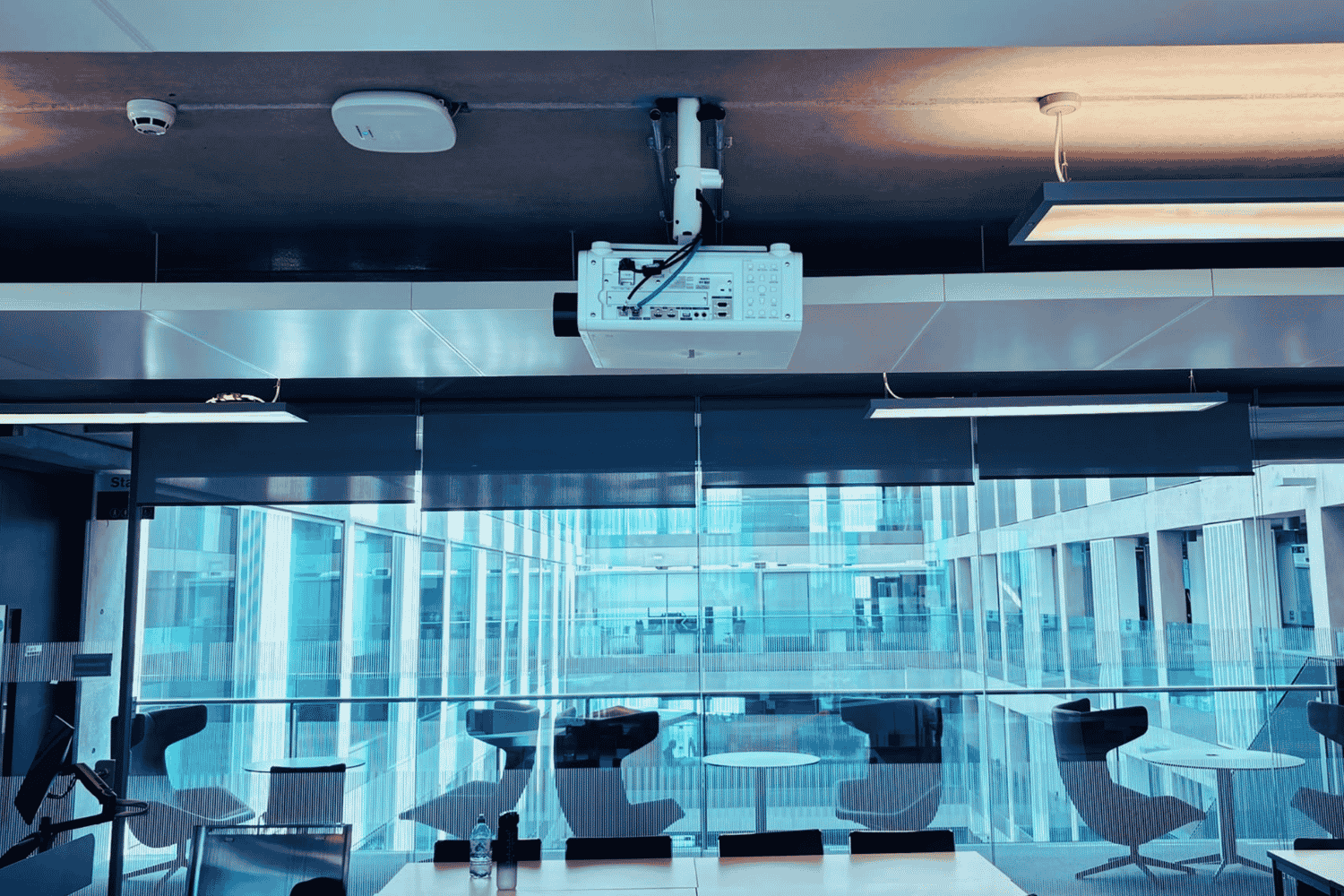
Professional projection technologies are selected according to the individual characteristics of the learning environment rather than applying a single product indiscriminately, balancing room size, layout, teaching application and required visual performance.
This approach has seen Panasonic projection technology supporting learning environments across the estate, drawing upon a portfolio spanning different projection technologies and brightness levels.


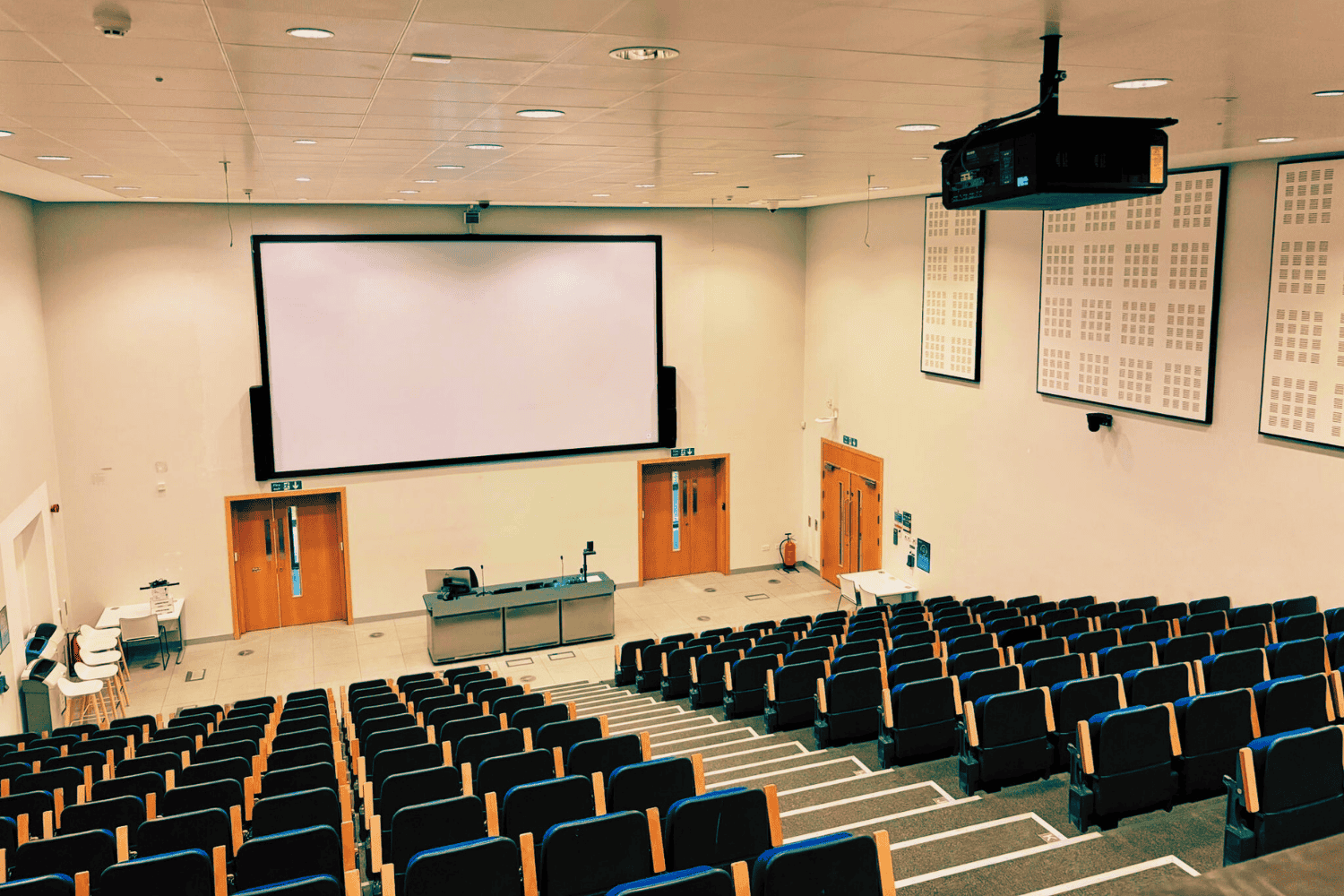

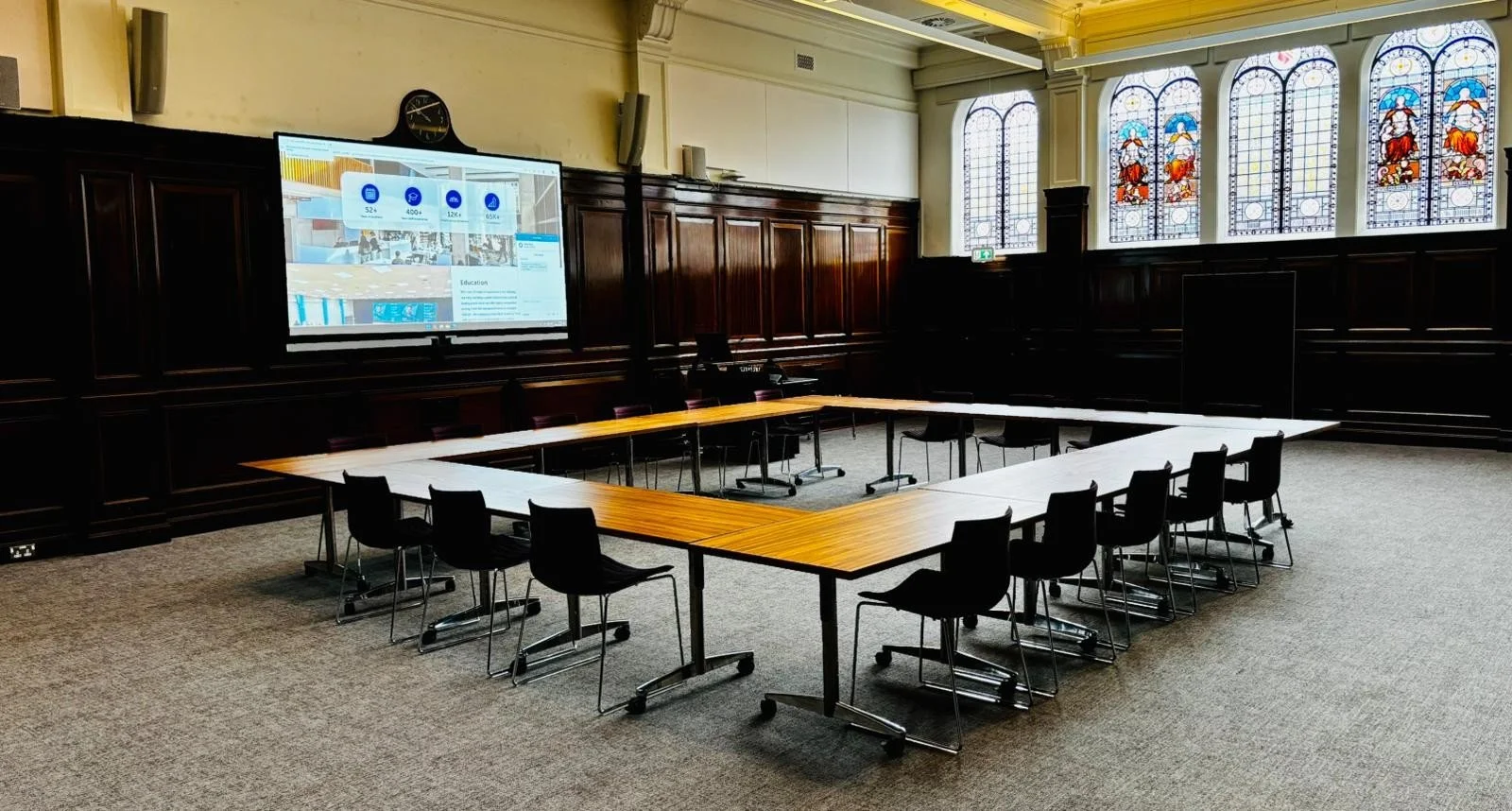

The most compelling evidence for Manchester Met's approach can be found in the results. The University's AV estate has grown by more than 15%, yet the number of AV support tickets has fallen dramatically. Tickets reduced from 2,687 in 2023/24 to 1,382 in 2024/25, before falling again to 967 in 2025/26. Across two years, that represents a reduction of approximately 64% in support demand. Escalated support calls to Roche AV Pro also fell from 70 calls costing £27,563 in 2023/24 to 20 calls costing £8,635 in 2025/26, representing a 69% reduction in escalations. Those figures demonstrate the operational value of an approach built around consistency and reliability. The human impact is equally important. HyFlex provides students with greater choice in how they participate in learning, while the familiar AV environment reduces the cognitive burden placed on academics. As Emily Webb, Digital Education Specialist, explains: “What really makes this work is the AV design. The system is powerful yet easy to use, closely matching familiar teaching room interfaces with just two extra clicks. Behind this simplicity is a huge amount of expertise, care, and thoughtful design. Hyflex teaching places a high cognitive demand on academics and Cara’s team have made a complex setup feel intuitive and reliable. This gives academics the confidence to use Hyflex without feeling overwhelmed, which is no small achievement.”
Sustainability is also embedded within Manchester Met's approach to technology and lifecycle management. Rather than viewing sustainability independently from AV performance, considerations around equipment longevity, procurement, re-use and standardisation form part of the wider strategy. Lifecycle management helps extend the useful life of equipment and reduce unnecessary electronic waste, while sustainability carries a 15% weighting within smart procurement decisions. The move towards universal USB-C connectivity also reduces reliance on different proprietary cables and adaptors, while take-back, recycling and re-use initiatives further support circular-economy principles. Roche AV Pro supports this philosophy through its own re-use activities, redistributing suitable technology to schools and colleges where equipment can continue creating educational and social value. The approach aligns AV investment with Manchester Met's broader sustainability ambitions while demonstrating that reliability, lifecycle efficiency and environmental responsibility can reinforce rather than compete with each other.
Measurable Transformation
Supporting a Modern University
MMU's AV transformation demonstrates what can happen when technology strategy, learning & teaching, digital infrastructure & estates development are considered collectively. Across hundreds of everyday teaching & working environments, standardisation provides the most important benefit of all: confidence that the technology will simply work. Being named Modern University of the Year by The Times and Sunday Times Good University Guide twice in a row underlines an institution continuing to invest in outstanding teaching, research & student experience. Working alongside Manchester Met's IT&D and Estates teams & strategic technology partners including Crestron, Sharp, Panasonic & TeamMate, the partnership supports a long-term model for developing, integrating, managing & continually improving technology throughout the campus.
See How We Can Help
Whether you need a simple system or a fully integrated solution, our in-house experts are here to guide you every step of the way. See how Roche AV Pro can bring your vision to life.