

Barbara Hepworth Building - University of Huddersfield
Barbara Hepworth Building

Client:
Morgan Sindall


Project
Flexible learning solution in NEUPC member the University of Huddersfield’s £30m build Barbara Hepworth building. Including immersive VR and motion capture 'Phidias' Lab…
Brief
'A space designed to blur the lines between the physical and digital, and encourage inter-disciplinary collaboration'
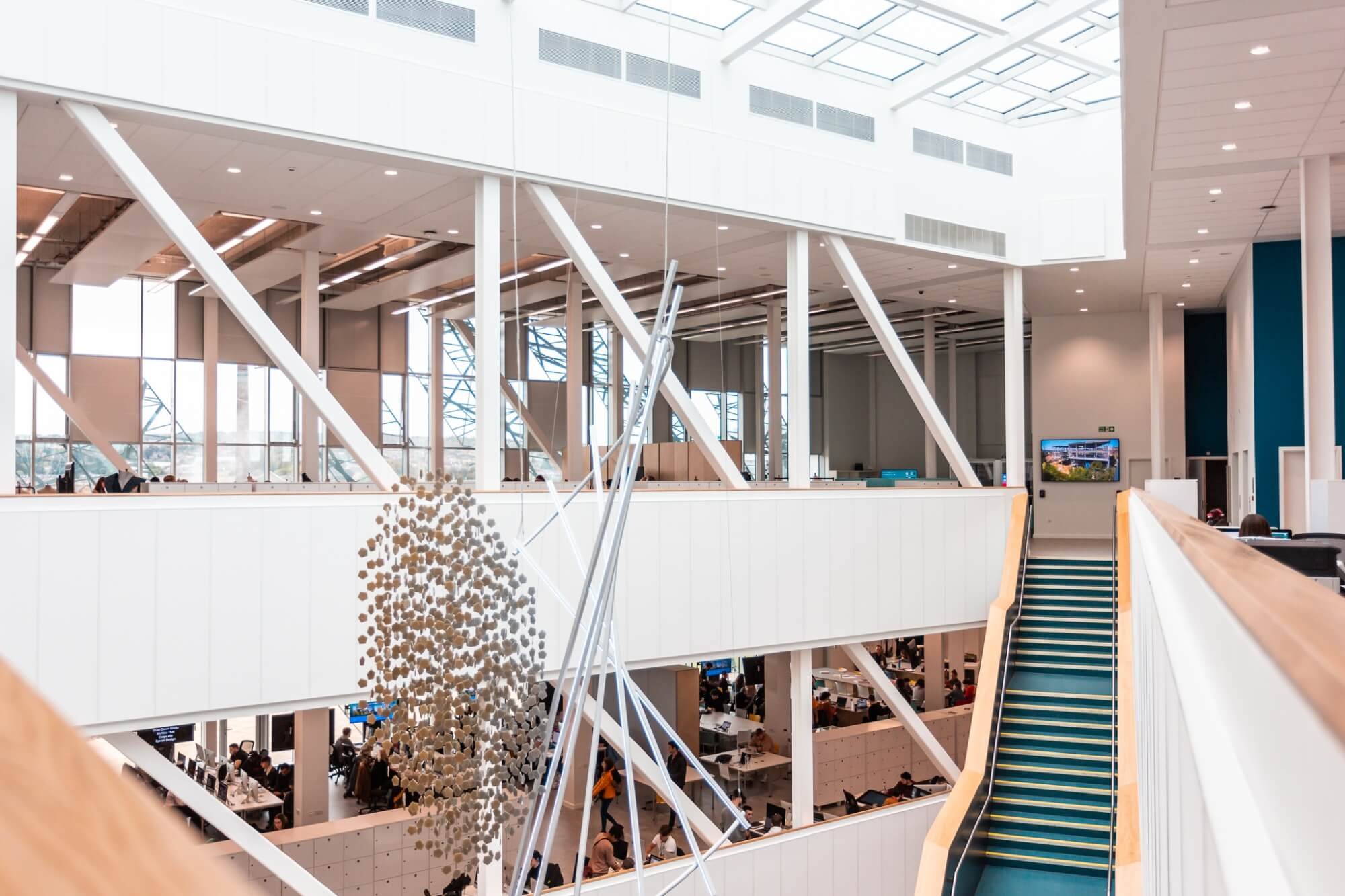
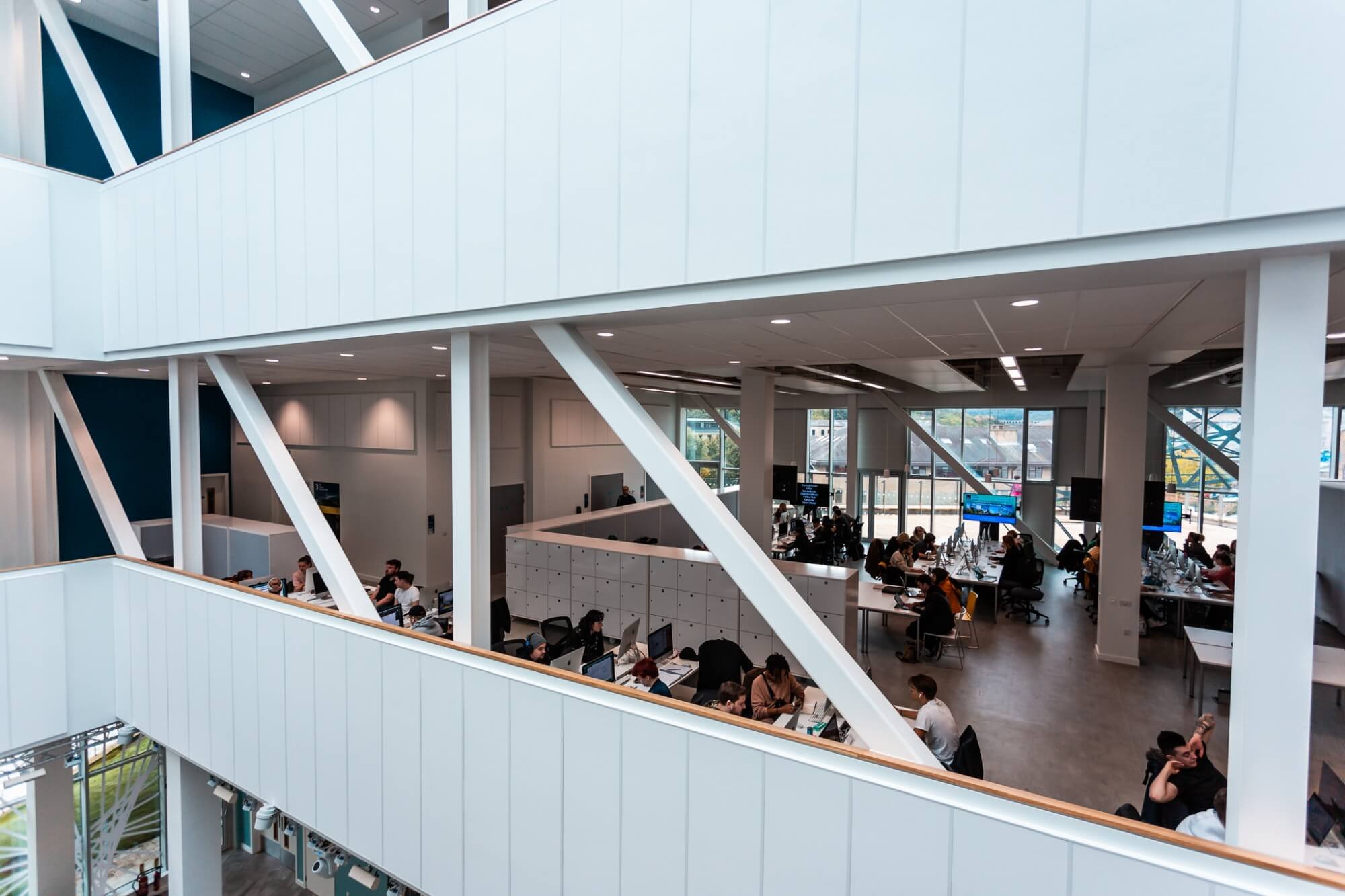
The Barbara Hepworth building at the University of Huddersfield is a new, state of the art building which has been designed to be the home of the School of Art, Design and Architecture.
Designed by Architects AHR and built by main contractors Morgan Sindall, the building is a contemporary space, which inspires creativity, collaboration and interdisciplinary learning.
The aim of the Barbara Hepworth building was to introduce a transformational shift that modernised the Schools provision and ways of working, whilst increasing the appeal from prospective students and increasing the opportunities for the School of Art, Design and Architecture to undertake innovative research.
The Barbara Hepworth building is discipline agnostic which focuses on core skills which cut across disciplines including Photography, Design, Print, Media, Simulation and Visualisation
Key Features
8 screen Philips video wall
Motion Capture suite in collaboration with Barco
VR technology in collaboration with Antycip
42 Philips signage screens


The Solution
Roche were a key player on the project from the early stages, engaging with the University, Morgan Sindall and AHR to establish a road map for the audiovisual technologies. The audiovisual systems integrated, further enhance collaborative opportunities and give the space the feeling of a 'live gallery' where students find themselves surrounded by their work and the works of others.
The flagship of the install is the “Phidias lab" a state-of-the-art simulation lab which incorporates a 3D wide Immersive Environment and a motion capture suite, whilst at the same time supporting conferencing, exhibitions and performances.
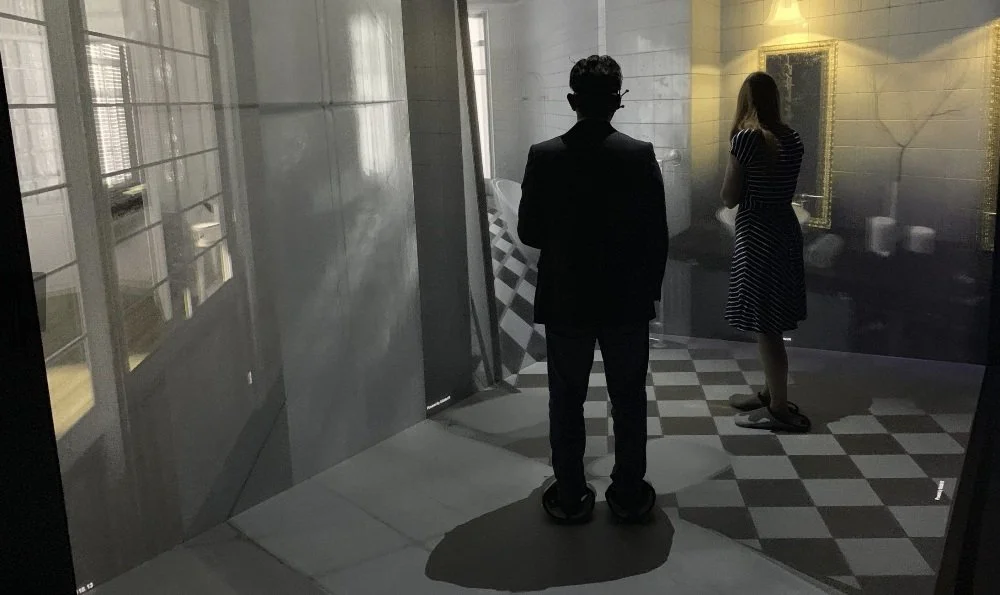
The Antycip VR Cave Overview
Designed to function as an experimental AR and head-mounted display (HMD) facility, the Phidias Lab promotes the development of the school’s digital strategy by encouraging the creation of digital content and immersive VR. It is home to an eight-screen video wall with several modes for exhibiting and presenting, a motion capture area, a feature sound and lighting system and now, a highly advanced immersive CAVE system.
Surrounded by a 16-camera Vicon motion capture system, the CAVE supports a wide range of virtual environment needs. It provides students from a variety of academic subjects the opportunity to develop their design concepts, without the need for potentially expensive physical models or printed material.
ST Engineering Antycip was tasked with providing a software platform that uniquely offers the ability to instantaneously bring industry standard applications into a stereoscopic VR environment, saving engineering time and effort while providing a fully interactive and unforgettable virtual experience. Antycip recommended using the TechViz software as it supports native applications such as Solidworks, Navisworks, Revit and Rhino, which are used by the School of Art, Design and Architecture. This allows students to create and instantly display 3D stereoscopic interactive content within the CAVE that is dynamically linked to the applications they know, without having to convert complicated data first.”
TechViz’s compatibility with over 200 industry standard applications makes it a flexible system to use, as it will be able to adapt to the university’s changing requirements in the standard applications it uses for the foreseeable future. Without this vital system, students with no background in VR would find it challenging to get their datasets displayed within the CAVE, as they would have been forced to export or translate the file formats, optimise the rendering performance, and load the dataset into another third party rendering solution that can drive the CAVE.
Antycip designed a three-face CAVE, comprising of three solid state Barco F90 laser projectors. Boasting 4K resolution and 3D capability, the projectors are equipped with ultra-short throw lens optics to address the primary front projection face of the CAVE and the wing face positioned on the right side. Both projectors are inverted and enable huge savings on the real estate required for the rear projection throw distance behind the solid specialist rigid acrylic substrate screens.
A third F90 projector utilises a specialist mirror to fold the light path down to the floor, where the content is combined with the two rear projection surfaces, thus offering a truly immersive display environment. Each projector is fed a high bandwidth stereoscopic signal using pure fibre optic based cable links to avoid potential electromagnetic interference.
Vicon spatial tracking cameras are calibrated to offer an interactive volume within the display, so that a dynamic eyepoint can be tracked for a single user wearing the supplied RF synchronised active shutter glasses. This tracking system also supports the interactions from a wireless handheld device, used for navigation within the virtual content as well as to initiate and control any interactive feature activated from the TechViz software while immersed.
The CAVE design enables unique folded lens optics to maximise the room’s real estate while offering vibrant high-resolution images to this faceted array. The solution is driven by dedicated PC-image generators with GPUs synchronised in both hardware and software to address the demands of rendering large complex datasets.
Due to the varied use of the CAVE, the university required a system which could be used by students from a range of technical backgrounds and abilities. “We needed to mitigate the need for complicated programming or the use of additional programmes before a model could be viewed in VR,” said Stephen Calcutt, technical manager and co-ordinator for the University of Huddersfield.
Additionally, each university department relies on a diverse selection of applications specific to individual subjects and focuses, making it a challenge for a CAVE system to support the specific requirements of each department. The CAVE accepts any OpenGL visual based content, making automatic changes upon the original dataset without the need for reverse engineering. Live changes to the dataset can even be shown within the CAVE.
Partners









The Outcome
The Barbara Hepworth Building is an example of success through collaboration. With several key stakeholders working together to produce a modern and vibrant building, which will play a role in unlocking the potential of students for many years to come.
Engaging with Roche AV was a pleasure from start to finish on this project. When Craig presented us with the challenge of delivering a state of the art immersive display for the University we managed to combine the strengths of both our companies to provide a full solution for the client that was very impressive
John Mould - Commercial Development Manager, Antycip.
See How We Can Help
Whether you need a simple system or a fully integrated solution, our in-house experts are here to guide you every step of the way. See how Roche AV Pro can bring your vision to life.